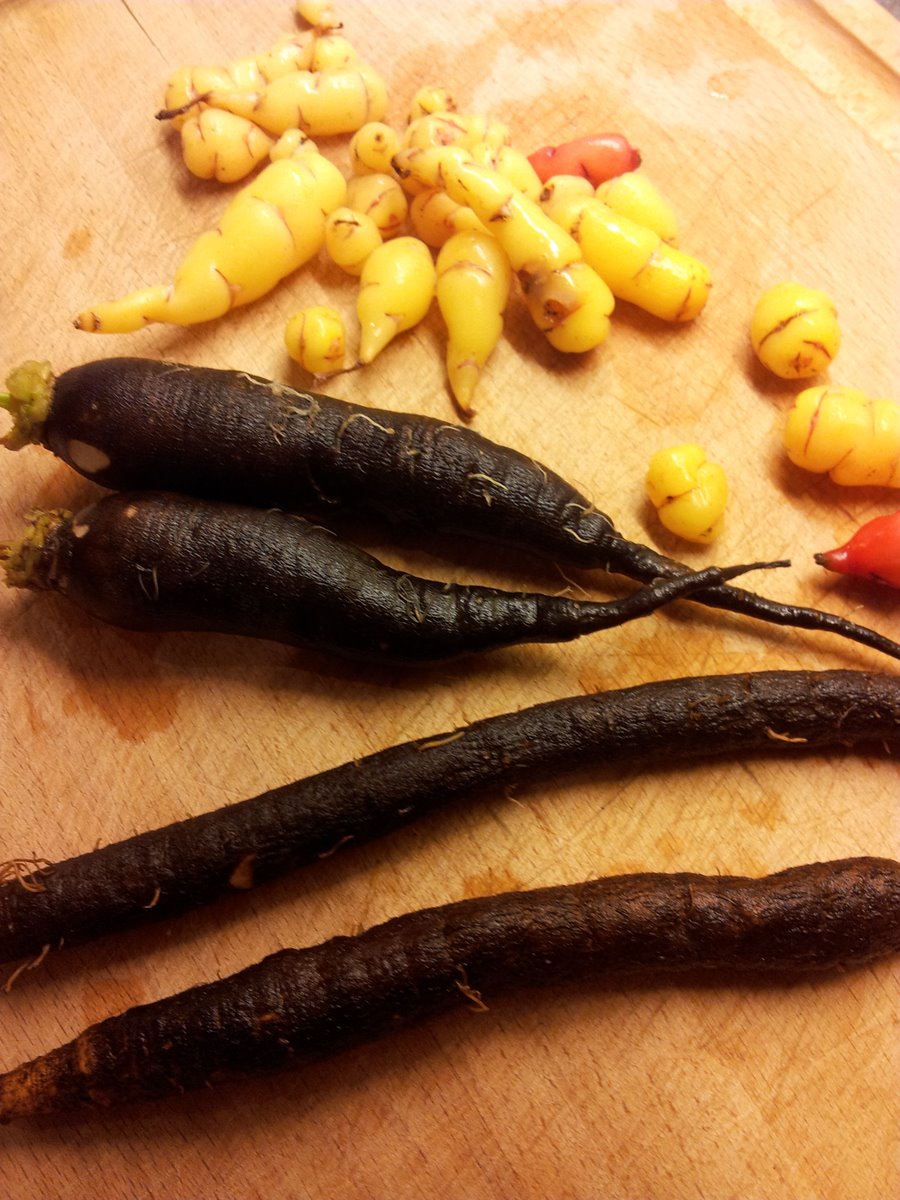
The last few weeks have been a season of abundant tubers. We’ve harvested bagloads of Jerusalem artichokes, some of which went to the inaugural DinnerTime community kitchen that we helped set up with CAGs, Food Justice and the Food Bank… and some of which stayed stubbornly hidden in the earth to ensure their re-emergence next year. This evening I cooked up a load of roots that I’ve never eaten before: oca, black radish and scorzonera (pictured above from back to front).
Like the quinoa we harvested a few months back, oca is a crop of the high Andes. Apart from a small outpost in New Zealand it’s still not very much eaten outside of its homeland despite being exceedingly delicious. The variety we grew (there are 50+) looks like a very small, indented potato, polishing up to a fine waxy shine once cleaned. The plant too was a good looking specimen, with delicately drooping clover-like leaves. I was in the Andes recently and saw huge sacks of many varieties of oca (and other lesser known tubers) being sold on the roadside – they’re second only to potatoes in terms of importance in traditional diets. Check out the International Potato Center’s page for more on this.
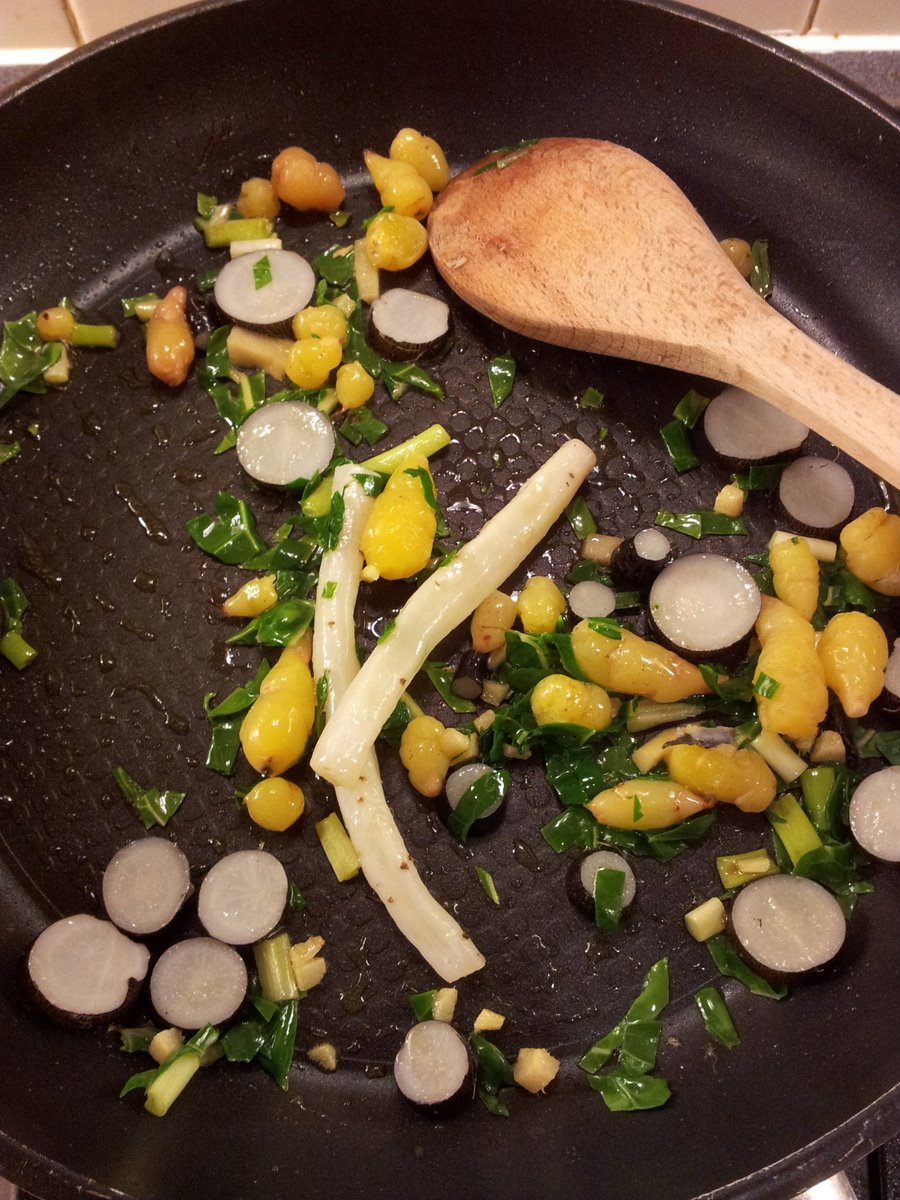
The black radish and scorzonera are a duo of black-skinned veg that we planted way back at the beginning of the first OxGrow season in March. The black radish, known as the gros noir d’hiver in France and the Spanish radish in England, has much tougher skin than a normal radish but the same peppery inside. Instead of eating it raw I cooked it in hot water for a few minutes and then crisped it in some olive oil with the other roots, some ginger and a few chopped greens. Tasty and very impressive looking if you maintain the black exterior against the bright white inside. Scorzonera means ‘black bark’ in Italian – it’s a bit like salsify. I blanched for a minute and scraped off the skin, then cooked whole for a further 20 minutes until tender before sticking it in with the black radish.


 OxGrow