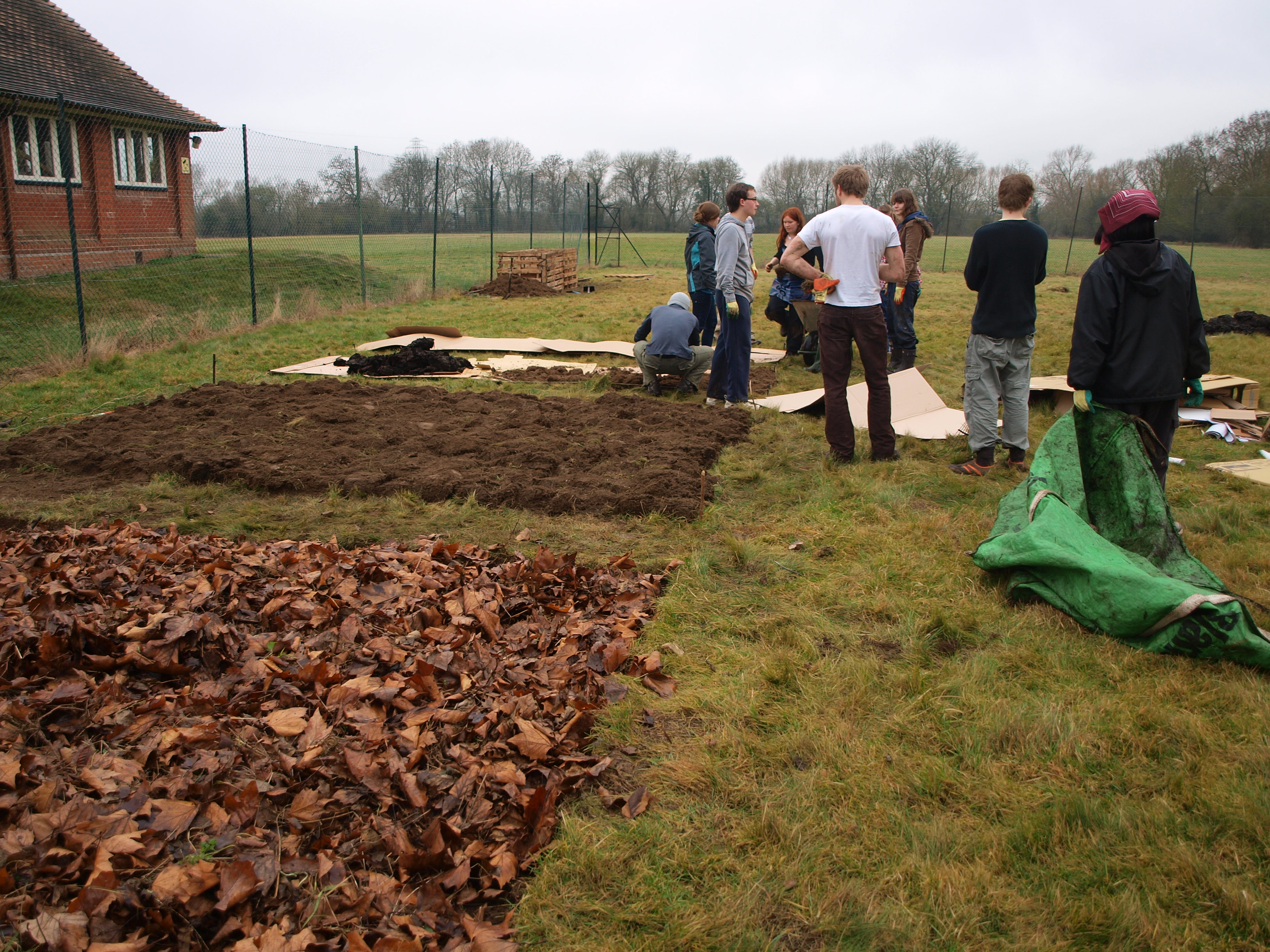
The First Ever OxGrow Session was on Saturday 19th February 2011!
We had a great turn out for our first working session on the site. The looming weather held out for us and we managed to get loads done and explore the surrounding area a bit more.
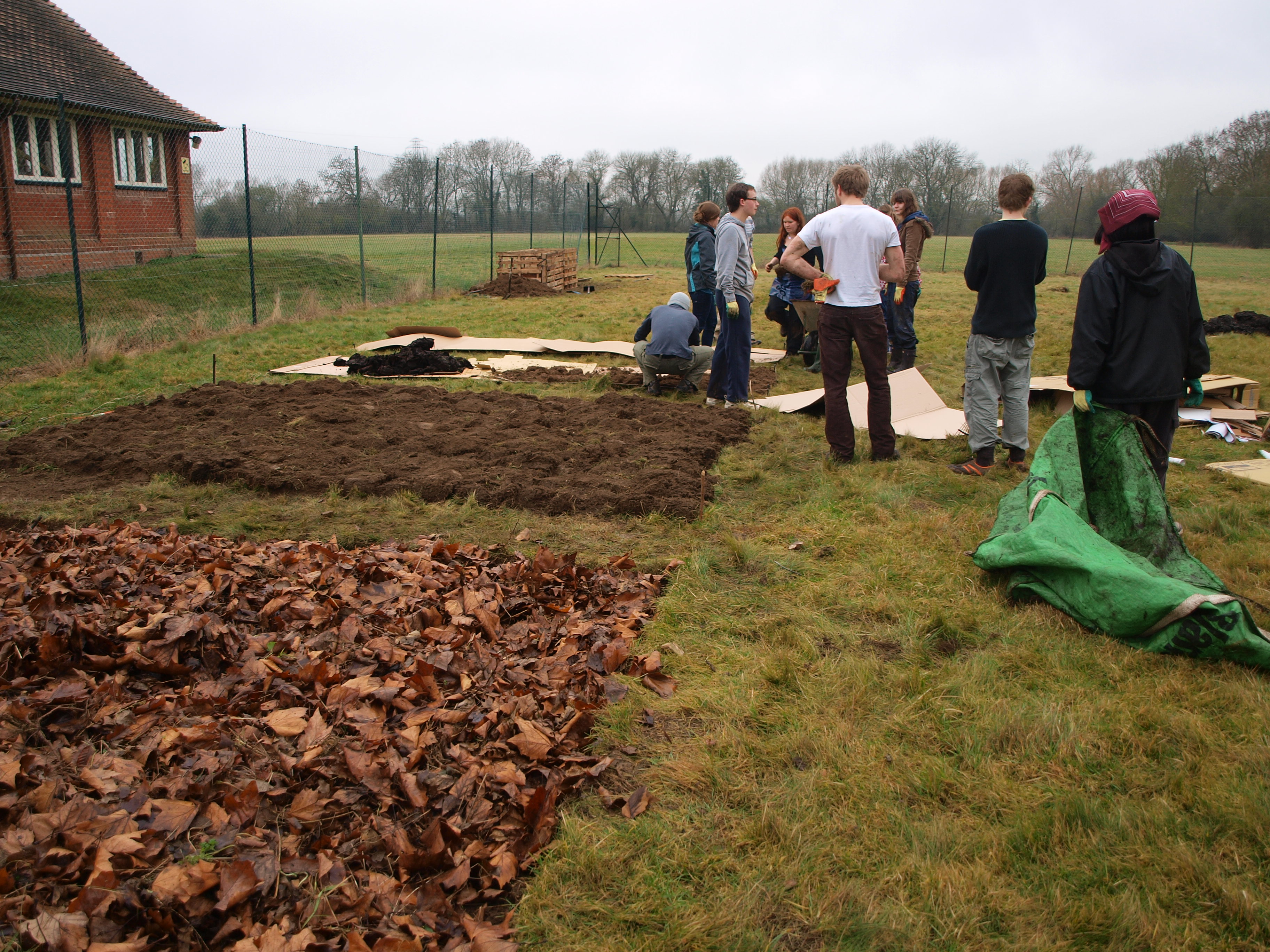
We got started on making the first few growing beds out of the blank canvas of grass that used to be the Corpus Christi tennis courts. We tried a couple of different techniques:
– In the far left corner we made two large beds (about 9’ x 15’ each) by digging out the turf on a first rectangle (to about 20cm depth) and then flipping it over and laying it out neatly onto an adjacent, already marked-out, second rectangle, just directly on top of the grass. This was a really quick way of preparing quite a large space, though where we’ve built up on the second bed by laying the turf, we might have to think about putting some wooden boards around to act as a retainer.
We finished off the first bed (now missing its turf and 20cm of topsoil) by spreading out some dropped leaves and well-rotted grass clippings that we collected from the boundaries of the playing field (very sludgy and smelly stuff made from years of it being left by the former groundskeepers). The addition of this organic matter should improve the moisture holding of the (fairly sandy) topsoil and provide some nutrients for worm and plant alike! The turf sandwich in the second bed should rot down nicely and leave us with a neat slightly raised bed. We’ll be looking to add some organic matter (either more grass-sludge, or else compost or well-rotted manure) to this bed too.
– We also set up two ‘no-dig’ beds, using a technique called “sheet mulching” that is very popular with permaculturalists. This time the beds were about 4’ wide, to allow anyone to reach the middle without having to walk on the bed, and the same length as the beds above. After marking the beds out, we laid cardboard (collected from recycling bins, with any plastic bits, sellotape, staples etc removed) directly onto the turf, and then placed dropped leaves, grass clippings-sludge and some soil removed in making the composters (see below) on top of the cardboard. The cardboard and grass below will rot down, and with some help from the many worms we found, all the organic matter we placed on top will get mixed in to leave a lovely, well-structured, fertile soil for us to plant into later in the season… Without having had to stick a single fork into the soil!
Composters
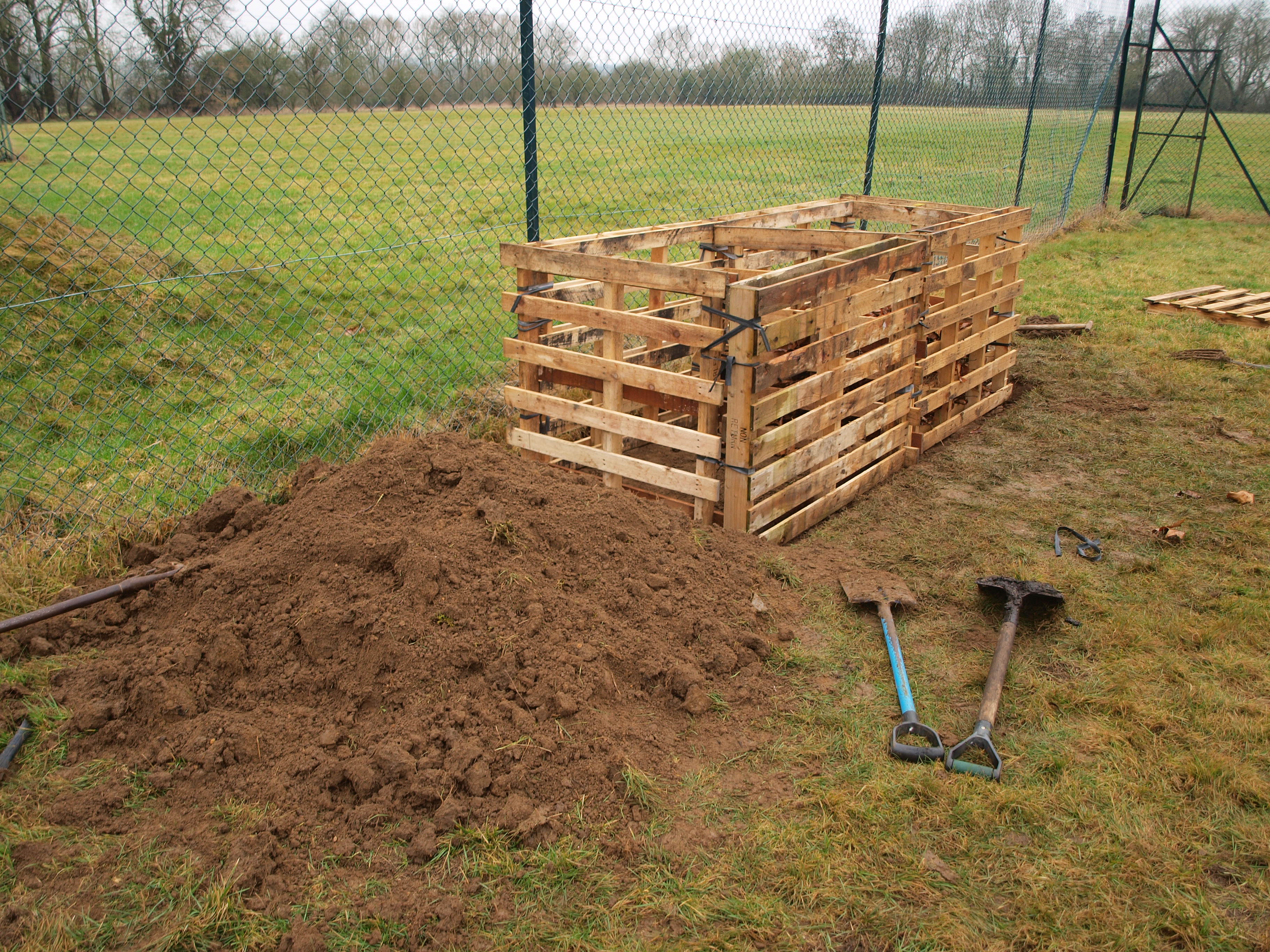
We built two big adjoining compost bins on the site too. We used wooden pallets that had been donated by a local builders’ yard. Pallets are dumped in landfill in huge numbers all the time, and they make perfect compost bins – and are a brilliant source of free wood for all sorts of other projects – so it’s a win-win all round! We dug a shallow rectangular hole the size we wanted our bins to be, and used the turf that we removed to build up the beds, this way we could “sink” our bins down a little below ground-level to keep them stable. We cut up long strips of bicycle inner tubes (donated by the Oxford Cycle Workshop) and used these to tie the pallets together instead of using wire, making the bins 100% reclaimed. We are reserving one bin for ordinary compost (uncooked fruit and veg peelings, tea-bags, garden waste, cardboard etc). We filled the other bin with dead leaves that we raked up from all over the site to make “leaf-mould”, which takes longer to make than ordinary compost but is wonderfully rich so it will be well worth the wait!
Joe and Doireann


 OxGrow