Archive for the ‘Uncategorized’ Category

6 Things to Do With Straw

Today was the launch of our OxGrow collaborative classroom, in which there was much discussion of plant families and crop rotations, and at which we learnt that radishes are in the brassica family alongside cauliflowers and cabbages, despite deceptively dissimilar appearances.

Today was also marked by much carting stuff from around and about the city back to our small slice of greenery. This reflects an interesting aside to the crop planning conundrum. When deciding what to plant, it’s important to take into account how much nutrient-rich organic matter will be required. Plants like tomatoes, brassicas and courgettes for example need lots of the stuff as the base material to transform into healthy glowing vegetables.

For many organic gardeners, their compost heap is their prime source of nutrients – taking their garden and kitchen waste and rotting it down into lovely rich material to dig in. At OxGrow, however, because we’re only a year old, we haven’t got enough compost to fulfil our needs over the whole garden… and, we admit it, we haven’t been quite as assiduous as we should have been in feeding and nurturing our heap to date (master composters – attention! would you like to come and help us out?). The University Parks kindly helped give us a kick start last year with the delivery of a skip-load of compost. This year we’d like to diversify our sources of organic matter, and it was with this in mind that we went out today on a search and rescue mission to source a lovely pile of horse poo kindly donated by local horses and their owner up the Abingdon Road.

Our other adventure was a two-trip wheelbarrow expedition through the centre of Oxford to bring back six lonely bales of straw in need of re-homing. What use is straw? 1) It can be added in layers to the compost heap to create a good carbon-nitrogen balance (straw is carbon heavy). 2) It can be used as a mulch, winter covering to protect the soil and aid moisture retention. 3) you can use it as a ‘pee-bale‘ to kickstart decomposition (adds nitrogen). 4) you can build a straw-bale house out of it. 5) you can sit on it (see above). 6) you can sleep on it. …Good night!
Black Bark

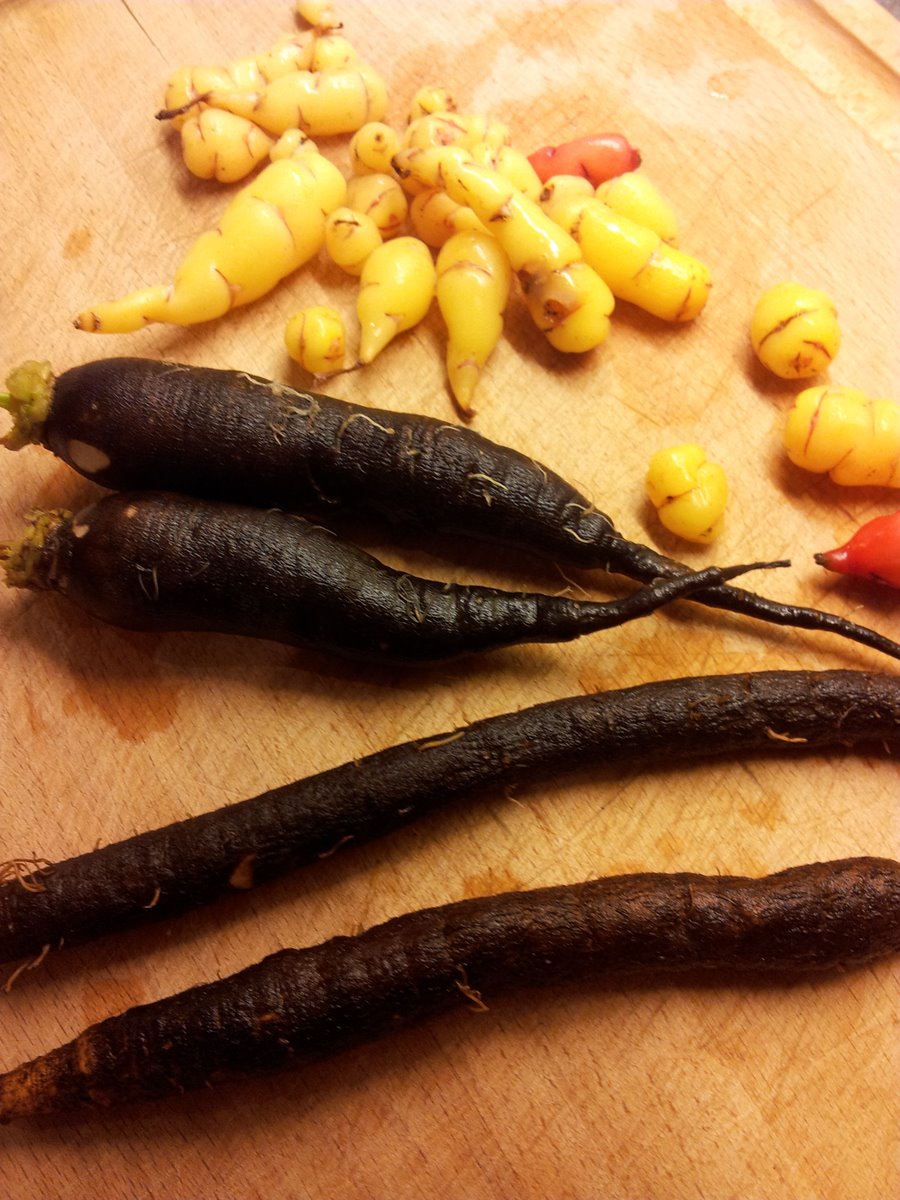
The last few weeks have been a season of abundant tubers.  We’ve harvested bagloads of Jerusalem artichokes, some of which went to the inaugural DinnerTime community kitchen that we helped set up with CAGs, Food Justice and the Food Bank… and some of which stayed stubbornly hidden in the earth to ensure their re-emergence next year.   This evening I cooked up a load of roots that I’ve never eaten before: oca, black radish and scorzonera (pictured above from back to front).

Like the quinoa we harvested a few months back, oca is a crop of the high Andes.  Apart from a small outpost in New Zealand it’s still not very much eaten outside of its homeland despite being exceedingly delicious. The variety we grew (there are 50+) looks like a very small, indented potato, polishing up to a fine waxy shine once cleaned.  The plant too was a good looking specimen, with delicately drooping clover-like leaves.  I was in the Andes recently and saw huge sacks of many varieties of oca (and other lesser known tubers) being sold on the roadside – they’re second only to potatoes in terms of importance in traditional diets. Check out the International Potato Center’s page for more on this.

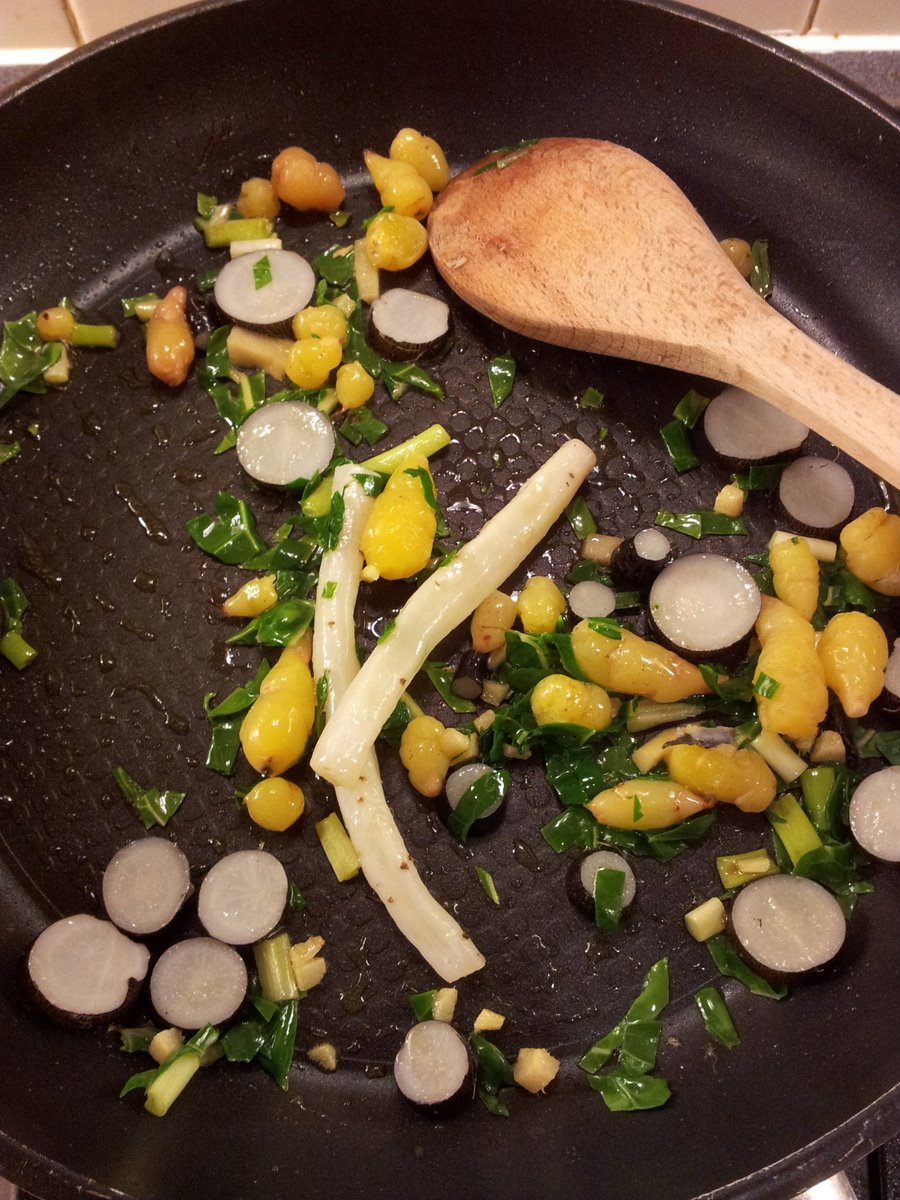
The black radish and scorzonera are a duo of black-skinned veg that we planted way back at the beginning of the first OxGrow season in March.  The black radish, known as the gros noir d’hiver in France and the Spanish radish in England, has much tougher skin than a normal radish but the same peppery inside.  Instead of eating it raw I cooked it in hot water for a few minutes and then crisped it in some olive oil with the other roots, some ginger and a few chopped greens.  Tasty and very impressive looking if you maintain the black exterior against the bright white inside.  Scorzonera means ‘black bark’ in Italian – it’s a bit like salsify.  I blanched for a minute and scraped off the skin, then cooked whole for a further 20 minutes until tender before sticking it in with the black radish.

It’s DinnerTime!

We are very excited to announce the launch of Oxford’s new community kitchen!

Sunday 13th November at the Turl Street Kitchen, Oxford.

DinnerTime is a celebration of food, family and friends – a way  to reclaim food in your community by making and sharing a meal together, reducing the amount of food we throw away and maybe gaining a new skill along the way.


Our first meal will be a trial for creating a ‘how to…’ guide that we are hoping other groups will use to  start their own community kitchen. Come and help us!

DinnerTime is a collaboration between OxGrow, Food Justice and the Community Action Group Project, with kind support from the Oxford Food Bank. It will be held at the Oxford Hub‘s buzzing new social action centre, just above the Turl Street Kitchen.

Please RSVP to sustainability@studenthubs.org if you’d like to attend some or all of the event.

 So how does it work?  Simple.  Below is how we imagine the evening panning out.

3pm  – 4pm        Hunt & Gather

Bring food you don’t know what to do with from 3pm onwards.  This could be tins you’ve had in the back of the cupboards for ages, spare vegetables, pulses, herbs and spices, gluts from your allotment, left over apple crumble, etc.  Generally, anything that’s edible and too good to throw out.  (Sorry but we aren’t able to take meat or dairy products for reasons of food safety).

4pm – 6pm        Let’s get cooking!

Come and help prepare the meal, this is where the fun begins!  Make something yourself, lead a group or simply give a helping hand.  There will be plenty of cooking equipment and DinnerTime chefs on hand to give advice (by the way all DinnerTime helpers have food hygiene, first aid certificates and a hearty appetite!). All ages and abilities welcome!

6pm – 7pm        DINNER TIME!

Sit down and enjoy the fruits of your labour; taste new things, have a natter, meet new people.  Remember to bring a plate, mug and cutlery .  If you have any allergies then please let us know in advance so we can cook to accommodate you or even better, come show us how it’s done.  Any food left over can be either taken away (bring some Tupperware if you like), donated or, if all else fails, composted.

7pm onwards   Film

Relax after a hearty meal with a hand-picked film, or get a drink from the bar and carry on chatting.

Easy peasy, Lemon squeezy!

Hope to see you there (don’t forget to RSVP),

Love from the DinnerTime Crew xxx

Quinoa: Queen of the Crop

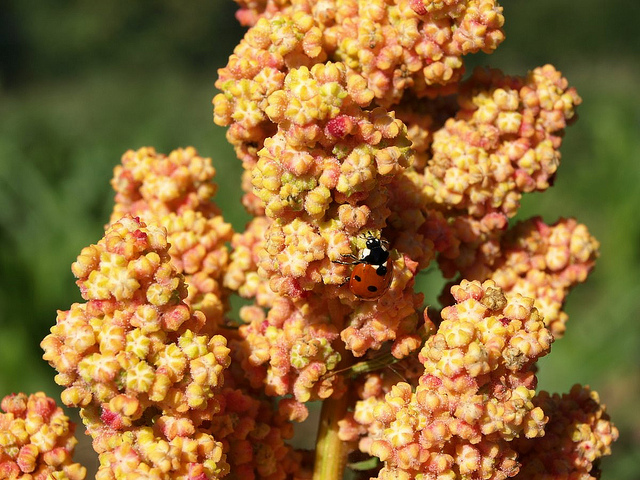
Our patch of six-foot tall willowy candy-coloured quinoa has been one of the surprise stars of OxGrow’s first growing season. The luscious red stalks of our Real Seed Company Rainbow Quinoa were the show-stealer in a strong field (haha) of competition, topping our beautiful heritage wheat and bloody butcher corn in terms of striking visual appeal.  After harvest, the crop has proven equally compelling, provoking a few moments of head scratching as we debated the best methods of releasing the grains from their dried hulls and then how to best separate out the accompanying chaff.  Add to this a back-story involving Incas and the conquest of the Andes and circulating rumours that it is a super-food being considered by NASA as a staple for long-term space missions, and we’re onto something interesting.

First, the basics.  It’s pronounced keen-wah.  Some people will claim it is keen-o-ah…  I think they’re wrong, but we won’t get hung up on technicalities!  It’s a new world crop, first domesticated in the Andes 3-4,000 years ago.  Although in culinary terms it occupies the same niche as rice, bulgar wheat and couscous, it’s actually not a true cereal grain but a goosefoot, more closely related to spinach, tumbleweed and the common (edible) weed fat hen.  When the conquistadores arrived in quinoa-country, they tried to persuade the Inca people to give up on such ‘Indian food’ and grow wheat instead, a cereal vs. pseudocereal battle that is still raging in the Andes today, although in different form.  Nonetheless ‘the mother of all grains’, as it was known, survived and is still widely cultivated in Peru and Bolivia.  Not for no reason is quinoa beloved in South America.  In particular, it has a much higher protein content than other staples of the region like rice or corn (18% compared to 7% or 3% respectively).  And unlike other staples its protein component features a balanced range of amino acids, making it a good replacement for meat proteins in a vegetarian diet. It is high in fibre, phosphorous, magnesium and iron, and it is gluten-free.  Not only the quinoa grain itself but also the leaves can be eaten (we didn’t know this when we harvested, but we’ll save some for a quinoa leaf soup next year), and if the grains are germinated by leaving for a few days in cold water, their nutritional properties are magically multiplied as enzymes become active.

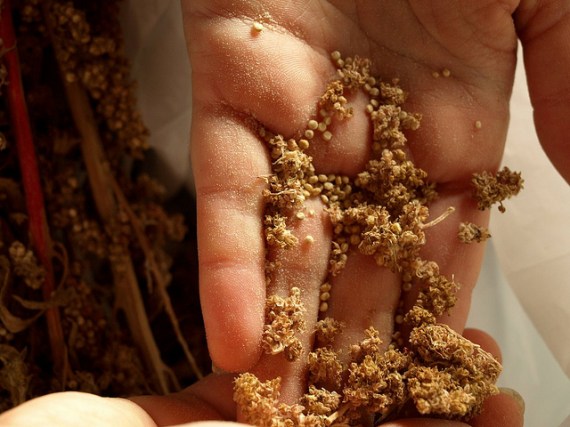
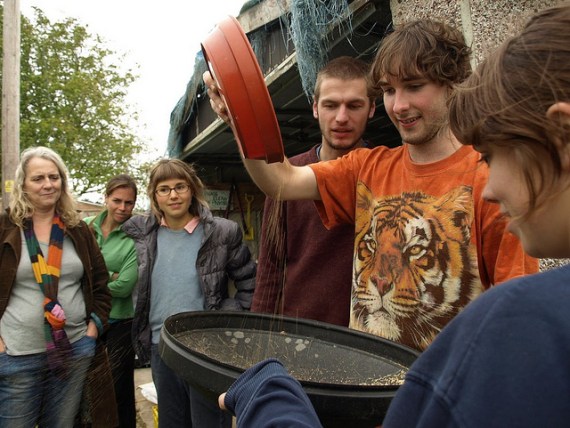
Quinoa also comes with its own natural defence against predators – it is naturally imbued with bitter-tasting saponins that prevent birds and beasts from feasting on the plants.  Brilliant… but it does add one extra stage to the already long processing that the crop requires before it can be eaten.  Good thing we love labour intensive crops!  We started off by cutting the stems and leaving to dry inside for a few weeks.  Then to extract the grains, a team of volunteers downed shovels and took up a meditative pace of work, rubbing the plant heads through their fingers to leave a mix of grains, chaff and dust.  Many methods were piloted to separate out the pure grains from this mixture, including shaking and sieving, but in the end good old-fashioned winnowing in the wind was the only thing that did the trick, letting the lighter chaff fly off into Oxfordshire whilst (hopefully) catching the grains below.  From this stage the saponins must be removed by soaking several times before cooking.  (Industrially-processed quinoa is often ‘polished’ rather than soaked, literally rubbing off the outer layer of saponins and reducing its nutritional value).  Advice from experienced quinoa farmers and chefs much appreciated on how to improve our process! Next on the agenda is cooking it up for our Harvest Festival this Sunday. When boiled, the disk-shaped seeds – which resemble flattened couscous grains – unfurl their crunchy tail-like ‘germ’ and can easily be mistaken for tadpoles. Recipes coming soon.. any good ideas?

Quinoa and chaff, by hand!

Peter winnows to enraptured audience

Edible Cartography

The pages of our blog have been silent for too many a day, so busy have we been harvesting, sorting, threshing, cooking… and eating, of course.  Which is an excuse to say that we welcome all to our wordpress to publish guest posts on food, food security, agriculture, gastronomy and etc relating to Oxford in some (even tenuous) way.  If you’ve got an idea for a blog post or if you just want to write about what we did at last week’s work party, shoot an email to mail (at) oxgrow.org, which incidentally is our new email address.

For now however, the presence of numerous bags of apples all over my house, in various states of decomposition, is encouraging me to write up an update on the fruit-related activity of the last few weeks.  It has been a bumper crop of apples this year of 2011, and an early one, informs Rupert of Tiddly Pommes, a brilliant Oxford apple-pressing business.  He’s been working through the night to press the harvest of the numerous different varieties that end up as apple juice at the East Oxford Farmers’ Market, amongst them some Charles Ross and a few rough-skinned Egremont Russet, which are my favourite apple variety.  If you find Rupert’s stall at the market he’ll give you a taster of all of his varieties, an experience akin to wine tasting that will take you about twenty minutes to complete if you’re really paying attention.

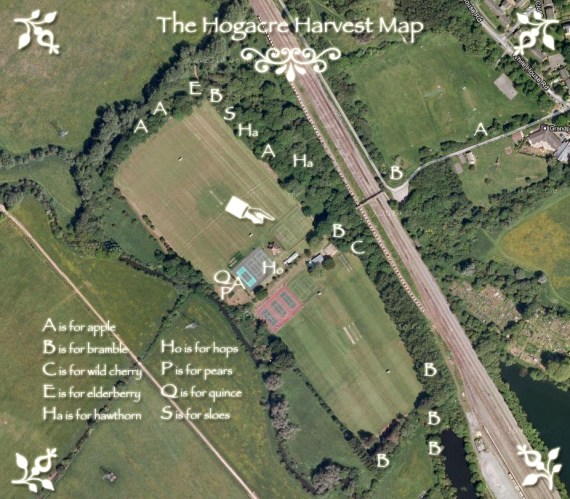
OxGrow has been engaged in an enterprise of a different nature, namely the mapping of fruit trees in the streets and fields of Oxford that are free for all to enjoy.  At this time of year there is little need to buy fruit if you have a few minutes spare to harvest nature’s bounty.  Our friend Jack has been putting together a map that will guide you towards your local trees and hedgerows, and last weekend we carried out a comprehensive trawl of the route from OxGrow to Iffley Road via Donnington Bridge to add to the directory.  Our survey of the streets to the west of Abingdon Road proved them to be remarkably free of public trees (remember kids, ask before scrumping apples from private property, and leave plenty for the birds!), but we did identify a range of goodies lining the Hogacre Common site, including sloes, elderberries, hawthorn, apples and blackberries, which are viewable on a natty map of our own design.  There’s much work to be done – please add your local trees to the Google map here.

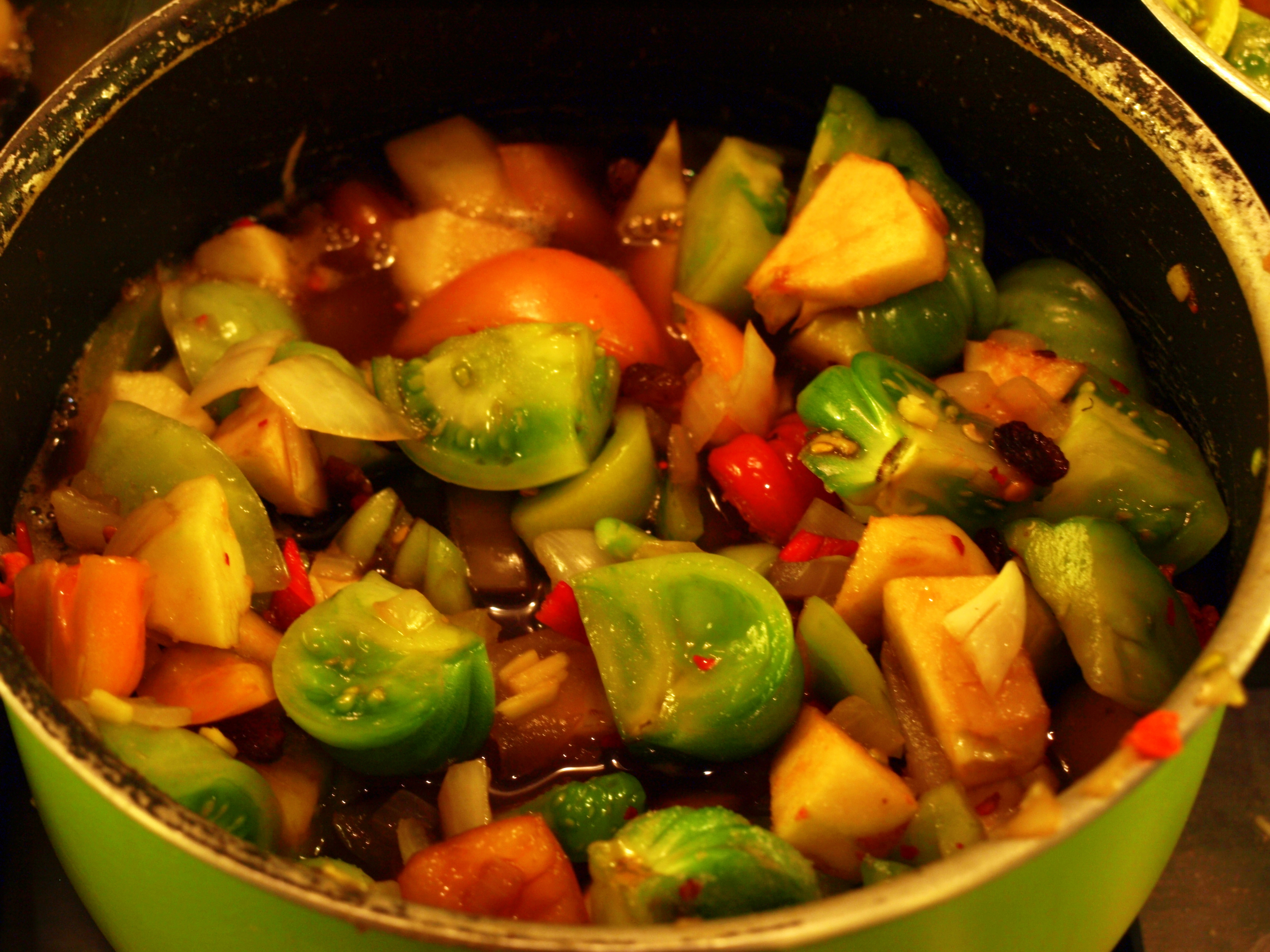
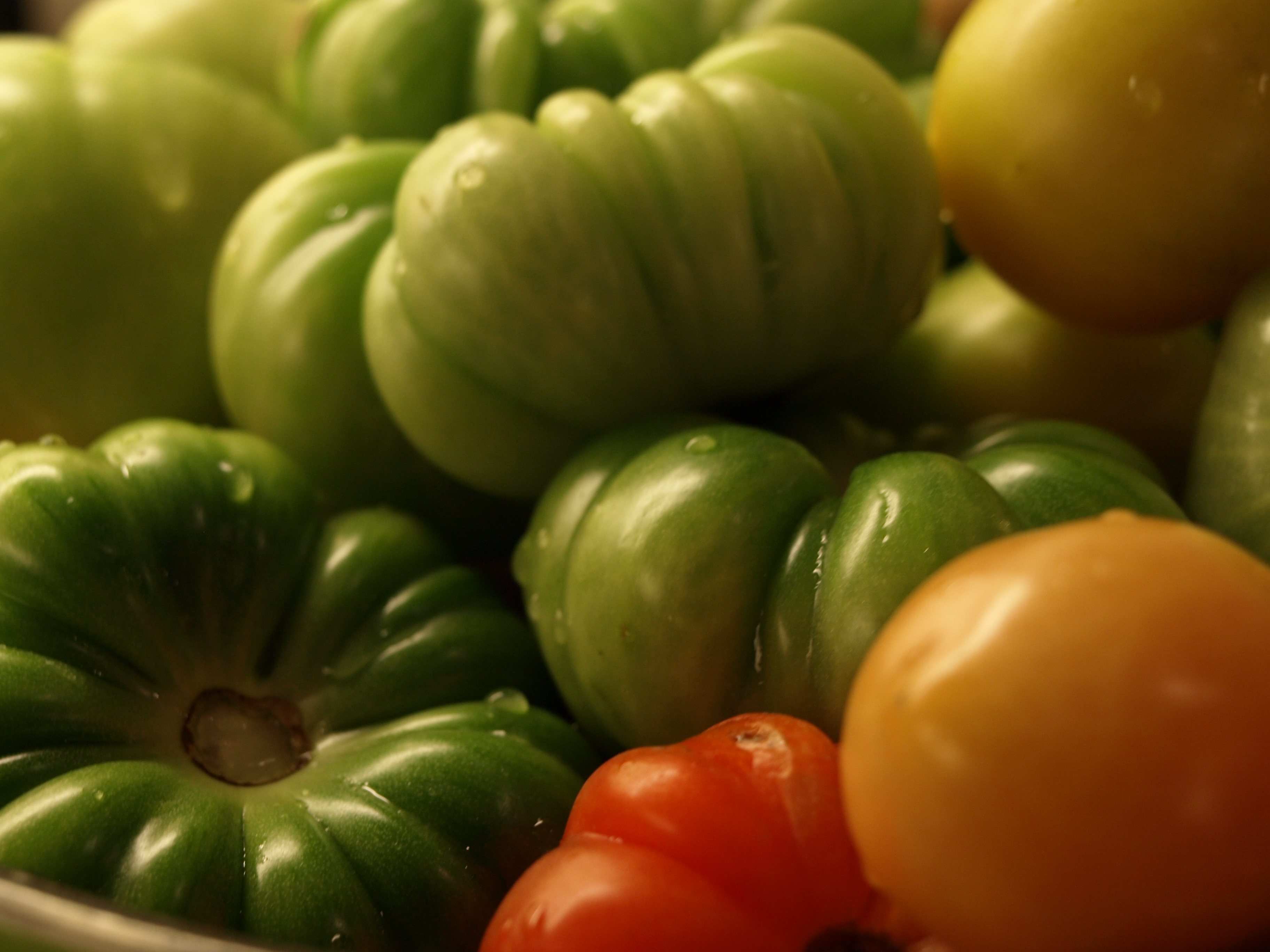
The conundrum of this season is of course the glut, however.  Just what do you do with 20 kilos of apples?  One noble solution is a very large apple pie.  I leave you with another, which also makes use of another fruit of the season (at least for those gardeners who are permanently running several weeks late and might have forgotten to plant tomatoes on time) and which will be making a special appearance at the Hogacre Harvest festival on the 16th of October.  Here’s the recipe: green tomato and bramley apple chutney (spicy or not), which was stolen off the internet and tweaked by myself and lovely co-chefs a few weeks ago.  Sterilise your jars properly and it’ll last for months; adjust quantities as necessary.  Nice with a spot of cheddar.

2kg Green tomatoes
500g Bramleys
250g Raisins
620g White onion
500g Demerara sugar
1/2 teaspoon allspice or spices according to your desire (ground cloves, cinnamon etc)
1-2 teaspoon salt
A few teaspoons chopped fresh ginger
1-3 Fresh red chillis according to taste (they taste good)
570ml pickling vinegar (comes in big, cheap jars)

Chop all of the ingredients according to whether you want to be able to spread the chutney onto an oatcake or if you prefer to eat it with a knife and fork (ours verged towards this end the scale).  Bring to the boil in a huge pot or many small ones for 1/2 hour to one hour depending on pot size and what kind of consistency you want (thick and juicy, ideally – boil off most of the liquid).  Wash jam jars and lids and then sterilise in a hot oven.  Fill with chutney, screw on the lids.  They will seal themselves as the chutney cools.

Julian

Fire, Knives and Digging Implements…

As the coordinators of student volunteering groups working local kids, these don’t usually feature heavily in our weekend activities, usually held in Oxford colleges. I can just imagine the face of Magdalen College’s Home Bursar presenting him with that particular risk assessment. The Giant Jenga set seems to be dangerous enough.

But on a June morning at the OxGrow site, as I watch some twelve children eagerly preparing a small fire and learning bush craft techniques under the watchful eye of a qualified and enthusiastic instructor, Harry, I realise what we’d been missing. Though the kids are surprisingly knowledgeable about the subject matter – credit where it’s due, Bear Grylls – it’s clearly a real treat for them to see, in the flesh, a bow drill being painstakingly used to start a small bundle of grass smouldering, and the flames being coaxed into life. Before long, we’re sitting round a merrily crackling (and very smoky) blaze.

Bushcraft Harry Goes up in Smoke

The children enjoying the OxGrow experience on this day come from disadvantaged backgrounds throughout Oxford. Whilst individual circumstances might vary – some are Young Carers, looking after an ill or disabled relative at home with little help or recognition, others may come from families afflicted by addiction or other difficulties – most of them have one thing in common: their capacity to enjoy a fun and protected childhood, free from responsibility and worry, is significantly restricted. At the Magdalen Young Carers Project and Kids Adventure, we primarily aim to give them some respite from their responsibilities and cares – what better place for kids to do this than down at the wild-yet-verdant OxGrow site?

After some introductory name-games, a deluxe tour of the site courtesy of Joe, and our bushcraft session with Harry, it was time to get down to some serious growing. The kids prepared seed beds and did some planting and watering with Doireann – particularly popular was collecting water from the stream. The new pump and water storage mechanisms look very impressive, but I don’t think they come close to the rustic simplicity of crouching on a rusty, half-submerged trolley to scoop up muddy river water! After a break for a lovely al-fresco lunch of fire-baked sweet potatoes, delicious and nutritious OxGrown salad and fire-charred turnips, and perhaps not-so-nutritious tinned hot dogs, it was back to planting and growing for some, and football on the nearby sports field for others. The day was rounded off by an exhausting and contentious game of capture the flag – the long grass near the site boundaries providing ample opportunities for the questionable practice of actually hiding the flag.

The kids went home happy and smiling, having had a brilliant day out, and having learned a few handy tidbits about horticulture and bushcraft to boot! A big thank you is due to our volunteers, and especially to Joe, Doireann, Harry and all the OxGrow team for making it possible. OxGrow represents a fantastic resource for the Oxford community – not only in the site itself, but also the fantastic people who run it – and we really look forward to coming back soon. The kids have a great time, you get another source of free and enthusiastic labour – what’s not to like?

Now to talk to College about lighting some fires on the Lawns…

Laurie Blair
Coordinator, Magdalen Young Carers Project
youngcarers@oxfordhub.org

He's got his match-striking technique down!

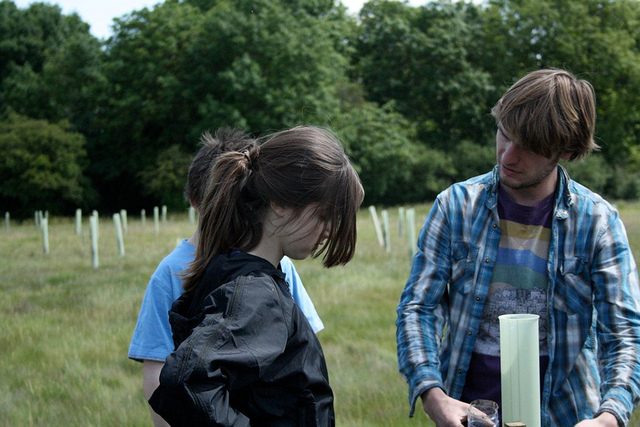
Peering down the tube at the saplings

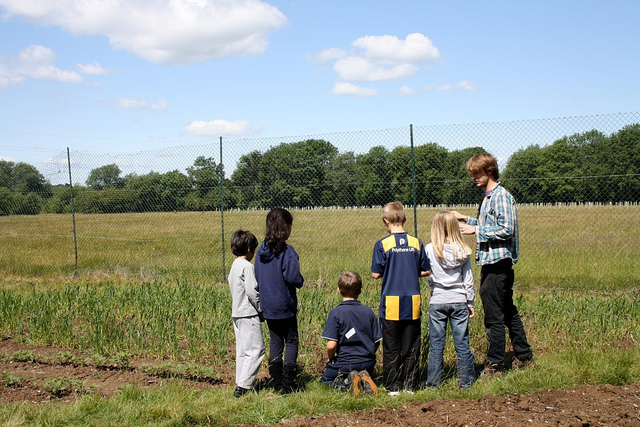
Examining the Heritage Wheat with Joe

Cathy clowning around!