Gardening for Finalists

Don’t be a hermit, grow vegetables.


By Rosie

I have been to the OxGrow garden in the snow. I have been to the OxGrow garden with flu, and I have been to the OxGrow garden slap bang in the middle of an essay crisis. But last week I couldn’t go.

May is upon us, and that means that the exams are looming and many of the student contingent of the OxGrow troops are busy trying to memorise  – say, post-Restoration picaresque Bakhtinian satirical ballad quotes, for example.* Finalists have to sit in enclosed spaces for long periods of time and the only gardening that takes place is the firm establishment of roots into the swivel office-chair that they have at their desk. The less-than-paper-friendly weather makes studying outside impossible, and so most of us find that we rarely get much of a slurp of sunshine during any particular day. But to miss the session last week came as something of a revelation, because it was only then that it occurred to me just how vital it is to get out, do hiking, digging, planting, even turf-lifting in the driving hail, just to get your body moving and feel like a person and not a nocturnal burrowing mammal.

But it doesn’t have to be a huge effort to get outdoors, and a half-hour walk a day is all you need to keep yourself physically and mentally healthy. So what are we waiting for, revision hermits? Let’s get out there!! Take a 15-minute wander around the nearest green patch you have in between lunch and your next stint of work to banish the post-food sleeps – walk the longest way possible to the supermarket to get your milk (bonus points if you do get genuinely lost) – even have a go at foraging to collect ingredients for your next dinner! Nettles, dock leaves, wild garlic, and all kinds of other things are in season and probably in your nearest weedy patch right now, just check online for the best things to pick when and be sure to check that the things you have picked are what you think they are before you eat huge poisonous handfuls of them. Some great foraging sites are:
– foragable UK plants arranged by month 
– fantastic printable guide from Countrylovers
– BBC’s guide to foraging for absolute beginners
Don’t forget never, ever ever to eat anything that you are not absolutely sure is safe – and it might be a good idea to steer clear of mushrooms in general because they can be so deceptive – but if you can figure out what a nettle looks like, a thick nettle soup with a splash of cream and a big grind of nutmeg in it is one of spring’s most surprising and delicious luxuries.

Not to mention, having plants in your living space is a good way to keep your mind on an even keel (whether or not they oxygenate the room like in Hot Fuzz), so why not start a few mini-projects to keep things green until the summer? At the pound store you can buy little grow-your-own herb pots for a pound a pop, so you can watch your own little parsley seedlings getting big and leafy on your windowsill; this is particularly exciting during revision time when they are right in your line of vision, as you can pop out to the library for an afternoon and come back to find to your astonishment that they have grown an entire inch in the brief time you were out. You can grow avocados straight from a left-over avocado seed (you won’t get fruit but it will make a handsome house plant), grow a pineapple by sticking a pineapple top straight into a pot filled with soil, or fill a cut-off repurposed 2-litre plastic bottle with a bit of compost and grow your own salad mix  like the ones you pay a fortune for at an unnamed popular supermarket of your choice. You can even regrow celery once you’ve used it all as a hummous vehicle!

Finally, of course, there is one last thing that plants do for us finalists and the rest of us who might still be feeling a bit over-chocolated from Easter. Veg. Glorious, crunchy, juicy veg. Any period of intense work is the perfect time to have a go at some creative cooking, because while you’re chopping, sautéing and braising you can’t possibly do any work, making it a great hobby to take your mind off things in your free time. I like to try to get as many vegetables into any one dish as possible and, more importantly, to make sure there are as many different colours as possible. As Carole King once said, ‘Every stew should be a rainbow in a bowl.’ It is so easy to forget your five-a-day when you’re stressed and busy, but here are some fabulous high-veg recipes to try:
squash and chickpea moroccan stew
mixed vegetables with yoghurt and green chili oil
-ultra-delicious courgette-ribbon veggie lasagna
curry-spiced vegetable fritters (by the by – this recipe is so tasty you may find yourself making it every week. And having them in sandwiches. Or for breakfast.)

It’s these small things that keep me going and stop me dissolving into a pale and malnourished Gollem-type creature; hopefully you’ll find something here that you also feel like giving a try! Of course, the easiest way to get your fix of outdoorsy organic bliss is to come to OxGrow every Sunday at 1pm, and make sure to come to the Asparagus Spring Festival on the 13th of May. Digging is cathartic, the crops are springing up already and you might just find you end up forgetting all about those things that rhyme with “leg-jams”.

* This is most definitely not a thing.

Sunday 13 May: Spring Awakening + Asparagus Feast

The Art of Rotation

We have recently been planning what to plant and where to plant it, which has lead to some interesting discussions about crop rotation/monoculture/polyculture vs. Permaculture systems and companion planting, but that’s for another post!

Using crop rotation enables us to use all the beds in the garden for different cops each year, on a rolling basis.

The alternative would be to plant the same crop in the same place year after year, leading to nutrient depletion in the soil and a build up of pests specific to a specific crop.

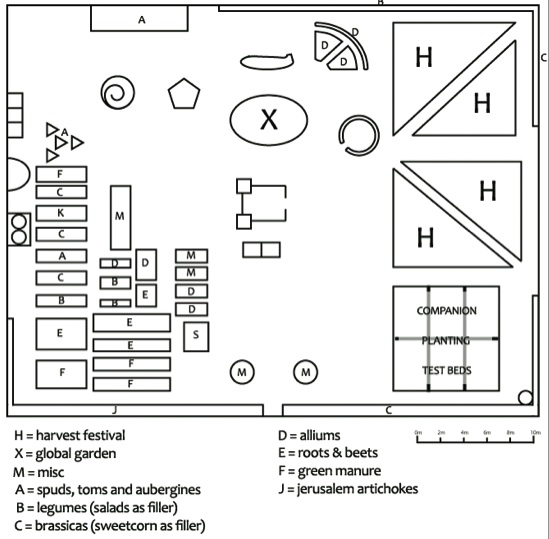
The groups of our crops have been divided into the following:
-Allium
-Legumes
-Potatoes
-Brassicas
-Roots
-Green Manure

We have approximately 4-6 beds for each crop group, meaning each year we can grow approximately the same amount of each crop family.

The science bit
90% of plants’ needs come from the atmosphere. The Nitrogen cycle is most important cycle: Nitrogen from the air gets broken down by bacteria into an accessible form for plants (Nitrates), as they can’t access it as a gas.

Legumes can make the biggest contribution to soil improvement due to their varied root systems – shallow to deep, they are able to grow in varied areas of soil. They are able to fix nitrogen and release it to the soil. These nitrogen rich crops, when they die and rot, add nutrient rich humus to the soil, thus increasing the quality of the soil in that immediate environment. Over time, it is possible to positively increase the quality of the soil from its original level of nutrients.

Some good examples of legumes to act as green manure – grown and left in the ground – are peas, beans, clover but some varieties of cabbage, oilseed rape, turnip, sunflower and buckwheat because they grow many leaves and fruit in a short period of time.

We can’t wait to get planting the plan out in the ground!

Blog by Rachel

Lessons from Master Composter

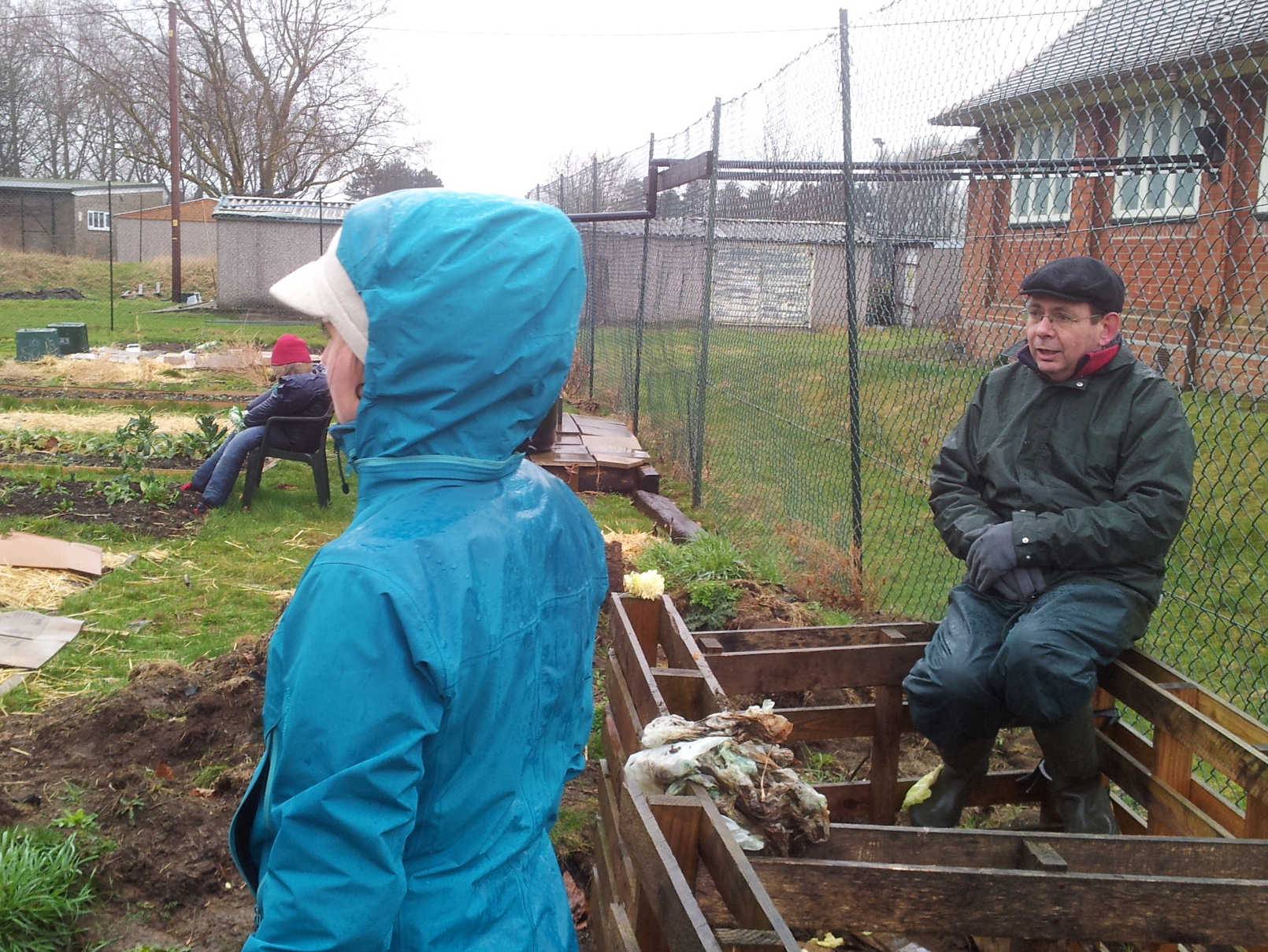
We were visited by our guru this afternoon, aka Master Composter Martin Stott who came to cast his sage eye over OxGrow’s heap and give us guidance for the future. First, the good news: the state of our heap is none too bad. Martin had seen far worse, he said, with a knowing shake of the head.

But first things first – the basics of life, our compost needs feeding more. He’s looking a little hungry, despite the best efforts of local OxGrowers who habitually bring down their kitchen waste. We took a long hard look at Alex and Michael’s eating habits over the past few weeks and divined that they have been eating mostly peanuts and swedes. Left-over raw foods are much appreciated by Sir Compost, but need to be chopped up into little bits to aid his digestion process. If he’s having digestive troubles we can also feed him a little something to help it go down – an accelerator like used coffee grounds (up to 10% of the pile) or compost, which we have in good supply at the moment. But like all good diets, compost requires most fundamentally a good mix of different types of foodstuffs: of greens (raw food waste, grass, veg etc) and browns (woody stuff, straw, cardboard, egg boxes etc). A varied diet = good health. Take note.

But the outlook is good. Feed him a bit more, keep a close eye on the green/brown mix, and we’ll have good organic matter in no time. Master Composter will pay us another visit later in the year to check on our progress.

6 Things to Do With Straw

Today was the launch of our OxGrow collaborative classroom, in which there was much discussion of plant families and crop rotations, and at which we learnt that radishes are in the brassica family alongside cauliflowers and cabbages, despite deceptively dissimilar appearances.

Today was also marked by much carting stuff from around and about the city back to our small slice of greenery. This reflects an interesting aside to the crop planning conundrum. When deciding what to plant, it’s important to take into account how much nutrient-rich organic matter will be required. Plants like tomatoes, brassicas and courgettes for example need lots of the stuff as the base material to transform into healthy glowing vegetables.

For many organic gardeners, their compost heap is their prime source of nutrients – taking their garden and kitchen waste and rotting it down into lovely rich material to dig in. At OxGrow, however, because we’re only a year old, we haven’t got enough compost to fulfil our needs over the whole garden… and, we admit it, we haven’t been quite as assiduous as we should have been in feeding and nurturing our heap to date (master composters – attention! would you like to come and help us out?). The University Parks kindly helped give us a kick start last year with the delivery of a skip-load of compost. This year we’d like to diversify our sources of organic matter, and it was with this in mind that we went out today on a search and rescue mission to source a lovely pile of horse poo kindly donated by local horses and their owner up the Abingdon Road.

Our other adventure was a two-trip wheelbarrow expedition through the centre of Oxford to bring back six lonely bales of straw in need of re-homing. What use is straw? 1) It can be added in layers to the compost heap to create a good carbon-nitrogen balance (straw is carbon heavy). 2) It can be used as a mulch, winter covering to protect the soil and aid moisture retention. 3) you can use it as a ‘pee-bale‘ to kickstart decomposition (adds nitrogen). 4) you can build a straw-bale house out of it. 5) you can sit on it (see above). 6) you can sleep on it. …Good night!

Black Bark

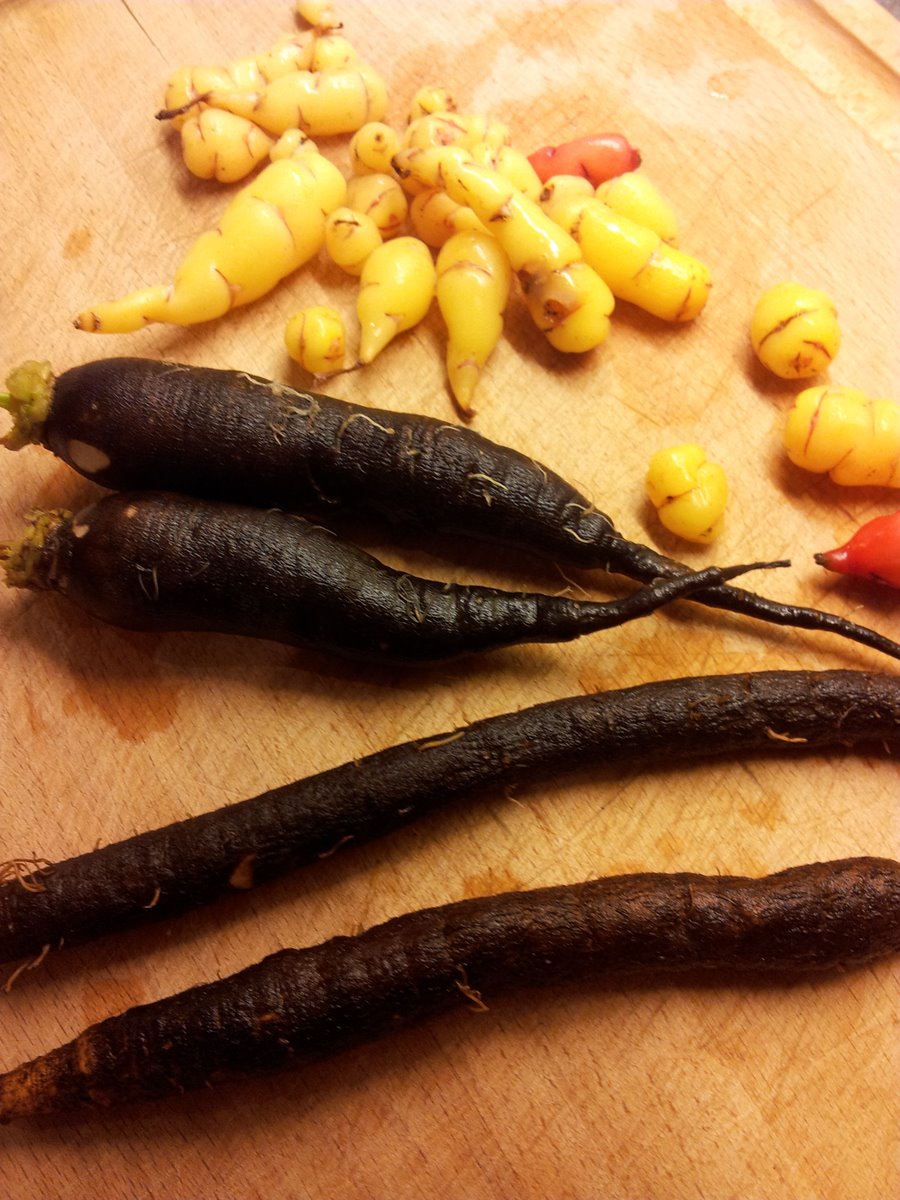
The last few weeks have been a season of abundant tubers.  We’ve harvested bagloads of Jerusalem artichokes, some of which went to the inaugural DinnerTime community kitchen that we helped set up with CAGs, Food Justice and the Food Bank… and some of which stayed stubbornly hidden in the earth to ensure their re-emergence next year.   This evening I cooked up a load of roots that I’ve never eaten before: oca, black radish and scorzonera (pictured above from back to front).

Like the quinoa we harvested a few months back, oca is a crop of the high Andes.  Apart from a small outpost in New Zealand it’s still not very much eaten outside of its homeland despite being exceedingly delicious. The variety we grew (there are 50+) looks like a very small, indented potato, polishing up to a fine waxy shine once cleaned.  The plant too was a good looking specimen, with delicately drooping clover-like leaves.  I was in the Andes recently and saw huge sacks of many varieties of oca (and other lesser known tubers) being sold on the roadside – they’re second only to potatoes in terms of importance in traditional diets. Check out the International Potato Center’s page for more on this.

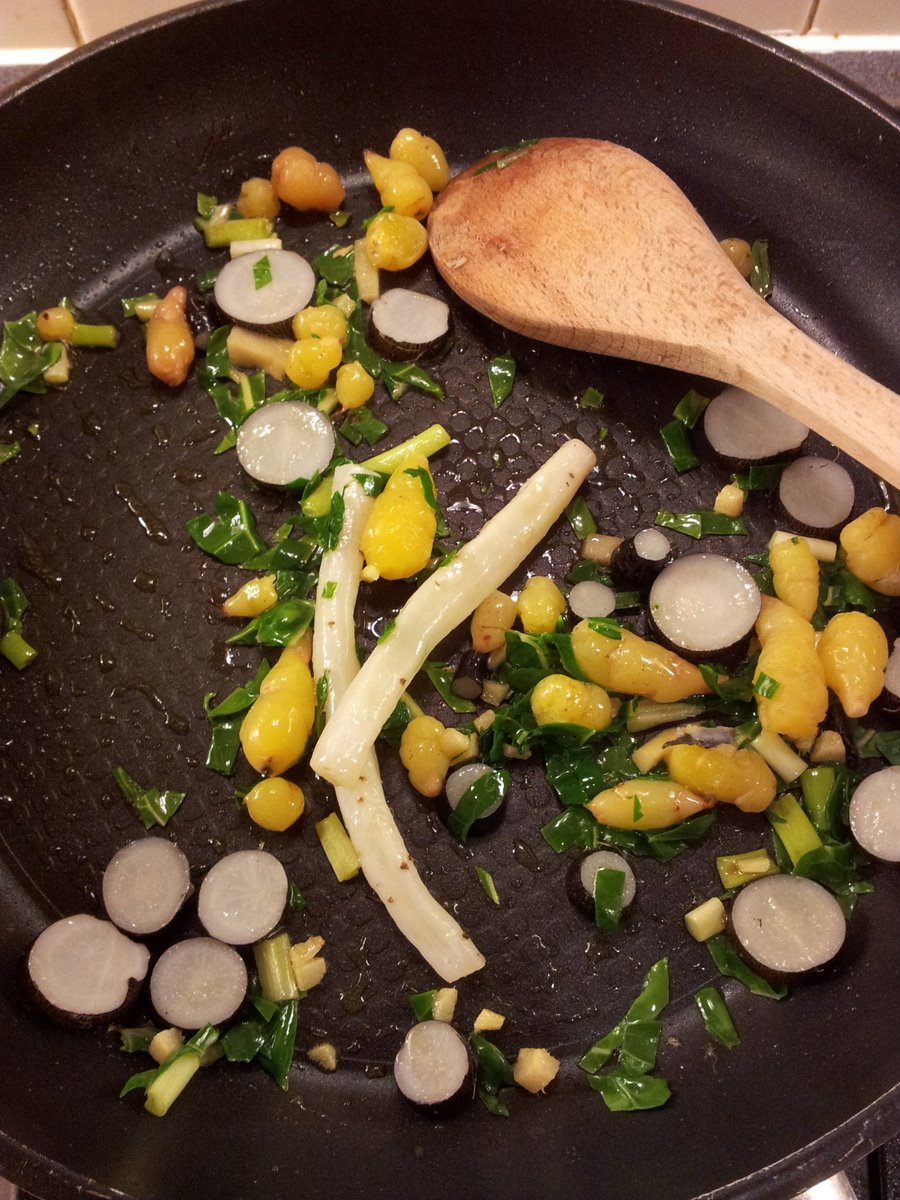
The black radish and scorzonera are a duo of black-skinned veg that we planted way back at the beginning of the first OxGrow season in March.  The black radish, known as the gros noir d’hiver in France and the Spanish radish in England, has much tougher skin than a normal radish but the same peppery inside.  Instead of eating it raw I cooked it in hot water for a few minutes and then crisped it in some olive oil with the other roots, some ginger and a few chopped greens.  Tasty and very impressive looking if you maintain the black exterior against the bright white inside.  Scorzonera means ‘black bark’ in Italian – it’s a bit like salsify.  I blanched for a minute and scraped off the skin, then cooked whole for a further 20 minutes until tender before sticking it in with the black radish.