A Mountain of Steaming Compost!


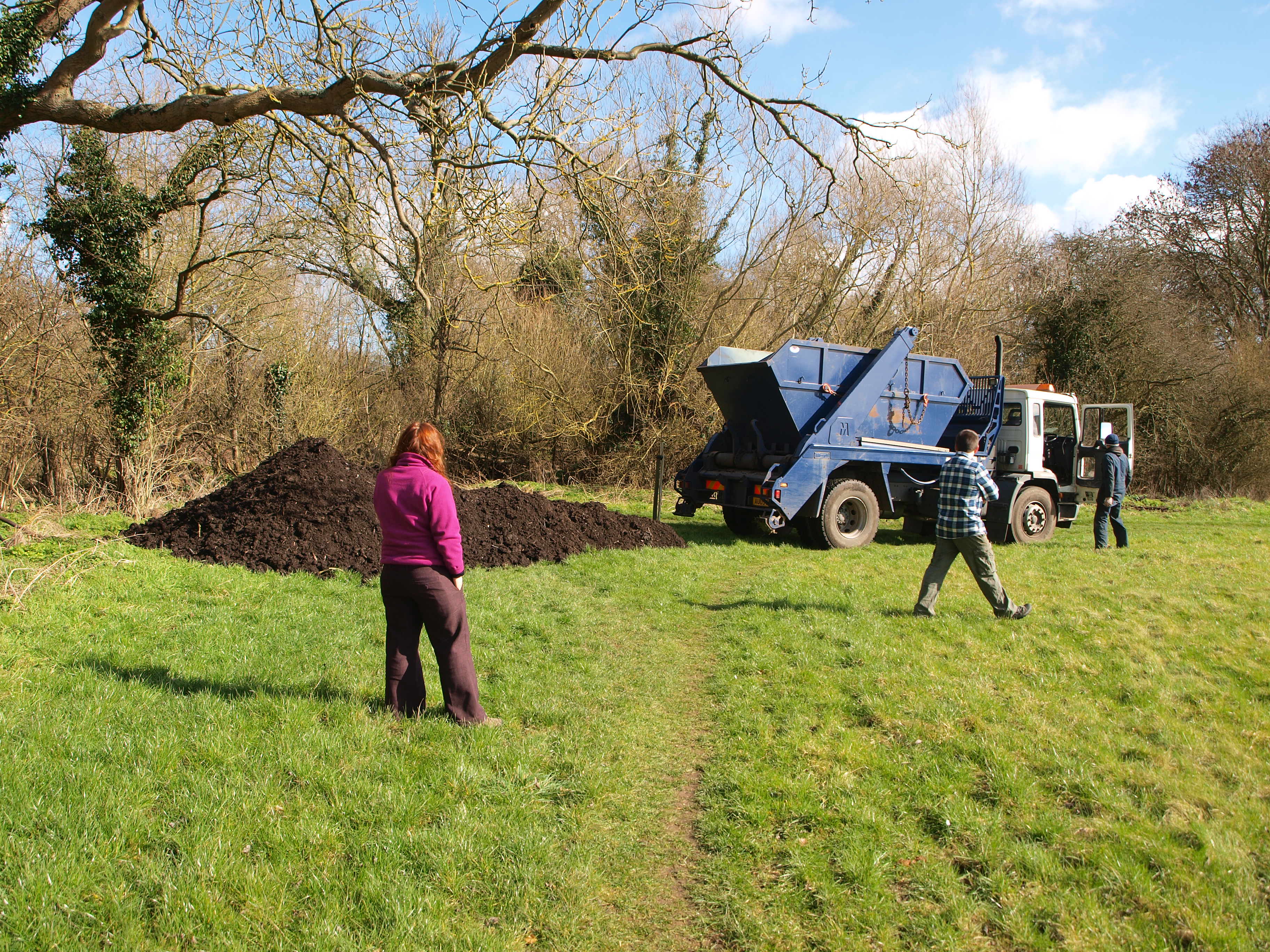
Yesterday felt like Christmas had come a few months late on the OxGrow plot.

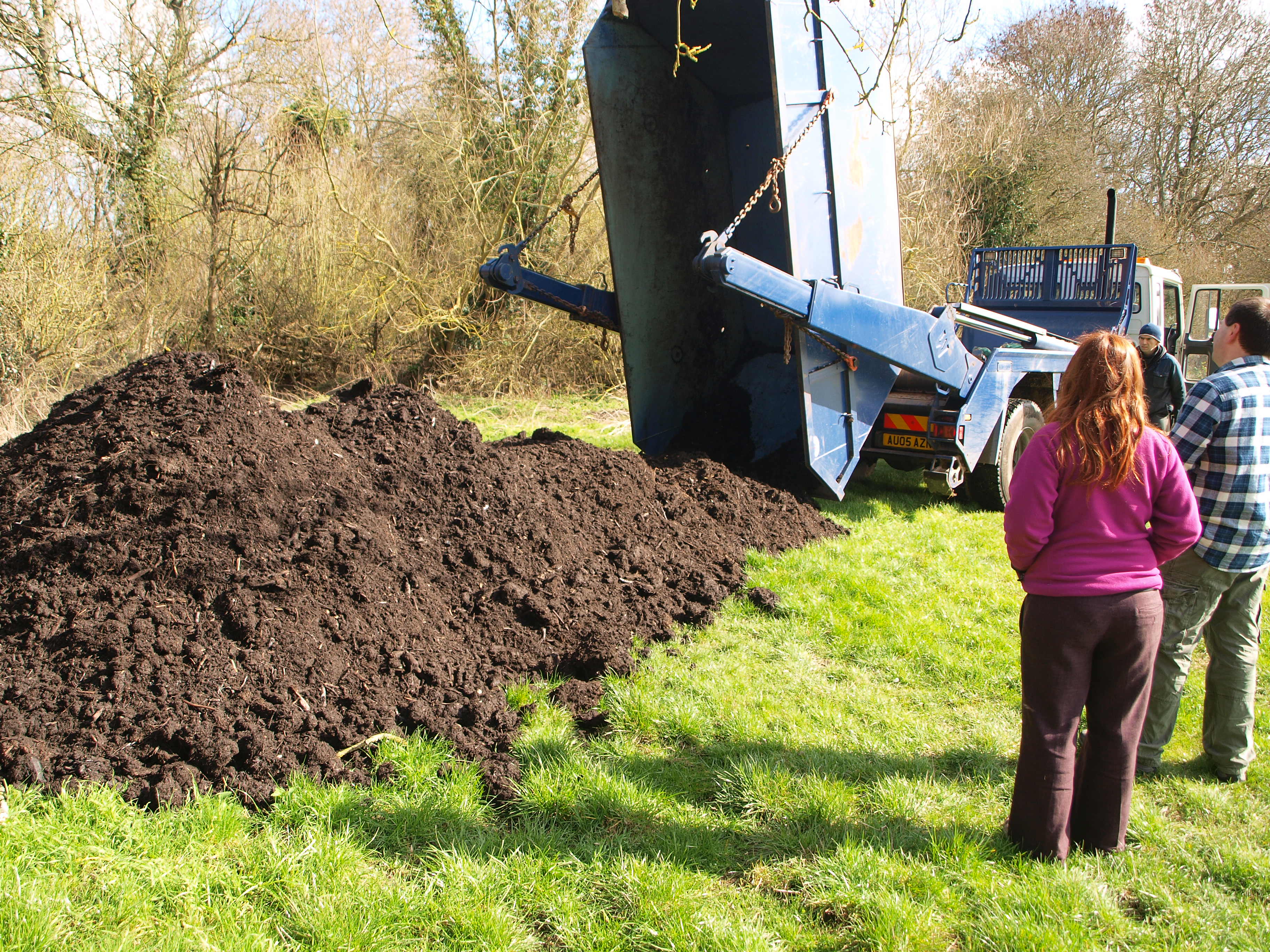
We received a delivery of an entire skip full of wonderfully rich compost, generously donated by the guys at University Parks. Somehow Nolan, the Parks’ compost guru and expert driver, maneuvered an enormous skip-lorry down a narrow track, over various tiny bridges (with less than an inch on either side of the wheels at times), over the railway track, and down to the bottom of the field – it was a magnificent performance! And we now have an absolutely enormous pile of perfect compost to build up our beds with.

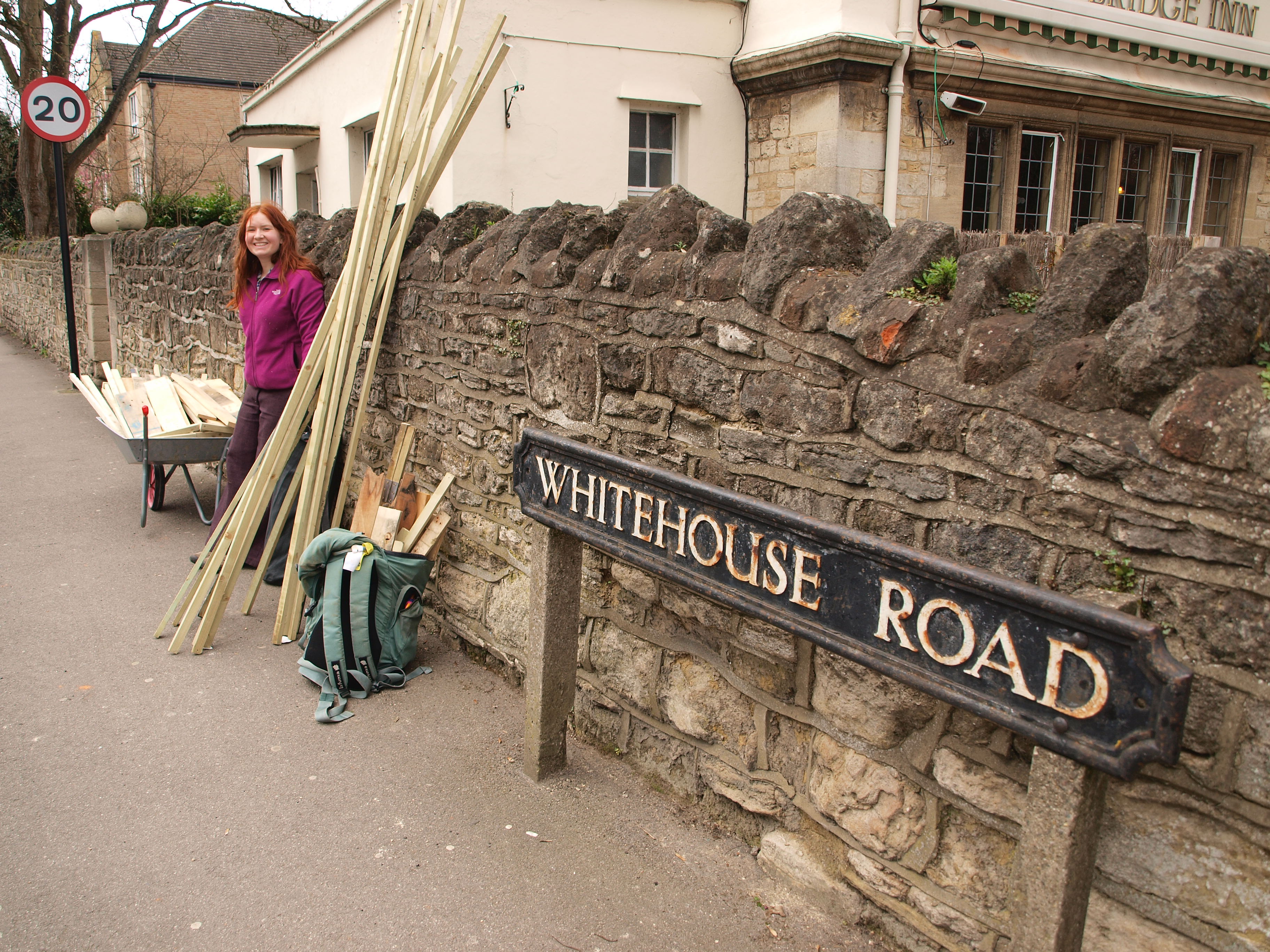
As if that wasn’t enough excitement for one day, we were also given a large collection of bits of wood of all shapes and sizes by Pembroke College’s drama society, who dismantled their Sweeney Todd set and donated it to OxGrow instead of chucking it in a skip. We got heckled a bit taking it down to the site in rucksacks and a wheelbarrow, but it will be worth it!

Mega open work-party tomorrow, 1-4 as part of the Conversations with the Earth Community Festival. Come along!

Doireann

Seedy Saturday

On Saturday 5th March we visited Barracks Lane Community Garden for Seedy Saturday. The garden invited people from around Oxford to bring along their seeds and swap them with varieties that the other visitors had brought with them. Activities included ‘gardening basics’ workshops on sowing and saving seeds. Phil Pritchard led a demonstration of seed-sowing methods using everyday recycled objects such as tetrapack cartons whilst Vicki Cooke from Garden Organic’s Heritage Seed Library explained the importance of seed saving and imparted the basics to the group. We were also delighted to see Barracks Lane’s new Eco-Cabin which soon was warm and toasty once the fire got going! We were proud to be part of the 160 Oxford residents who took part in Seedy Saturday this year.

Find out more about Barracks Lane Community Garden at:

http://www.barrackslanegarden.org.uk/

See some pictures from Seedy Saturday at:

http://www.flickr.com/photos/barrackslanegarden

Annabelle

From the Oxford Mail

Residents plant trees on sports field

By Ben Wilkinson

Residents are transforming a sports pitch by planting 1,000 trees and plan to turn tennis courts into a vegetable patch. More than 100 volunteers turned out to the Oxford University land behind White House Road, off Abingdon Road, on Sunday to begin the project. They are renting the rarely-used land from Corpus Christi College for the sum of one jar of honey a year. Ash, hazel, rowan, crab apple, oak, willow and lime trees were planted and there are also plans for a vegetable patch in the old tennis courts and beehives in a corner of the field.

The scheme is the brainchild of city green groups Low Carbon West Oxford (LCWO) and West Oxford Community Renewables (WOCR). Lois Muddiman, from WOCR, said: “There will be community woodlands, a community orchard, and community beehives and it will be a great place to come and spend time with your family. “But the main reason we are here is the CO2 saving.” She added: “It is going to be a resource run and enjoyed by the community for generations to come.”

Rod Chalk, of LCWO, said: “It is important to plant trees because it is a fantastic amenity for local people but it also sequesters carbon. “And this area has been pretty much neglected since I have lived here.” He added: “It is also important to get kids interested because it is their future. “I will be dead by the time these trees are fully mature but it will be important for the future generations.” Daughter Gemma, five, added: “I want to come back here in 10 years when it looks like a forest.”

http://www.oxfordmail.co.uk/news/headlines/8880569.Residents_plant_trees_on_sports_field/

Get involved with OxGrow!

The First Ever OxGrow Session!

The First Ever OxGrow Session was on Saturday 19th February 2011!

We had a great turn out for our first working session on the site. The looming weather held out for us and we managed to get loads done and explore the surrounding area a bit more.


Beds

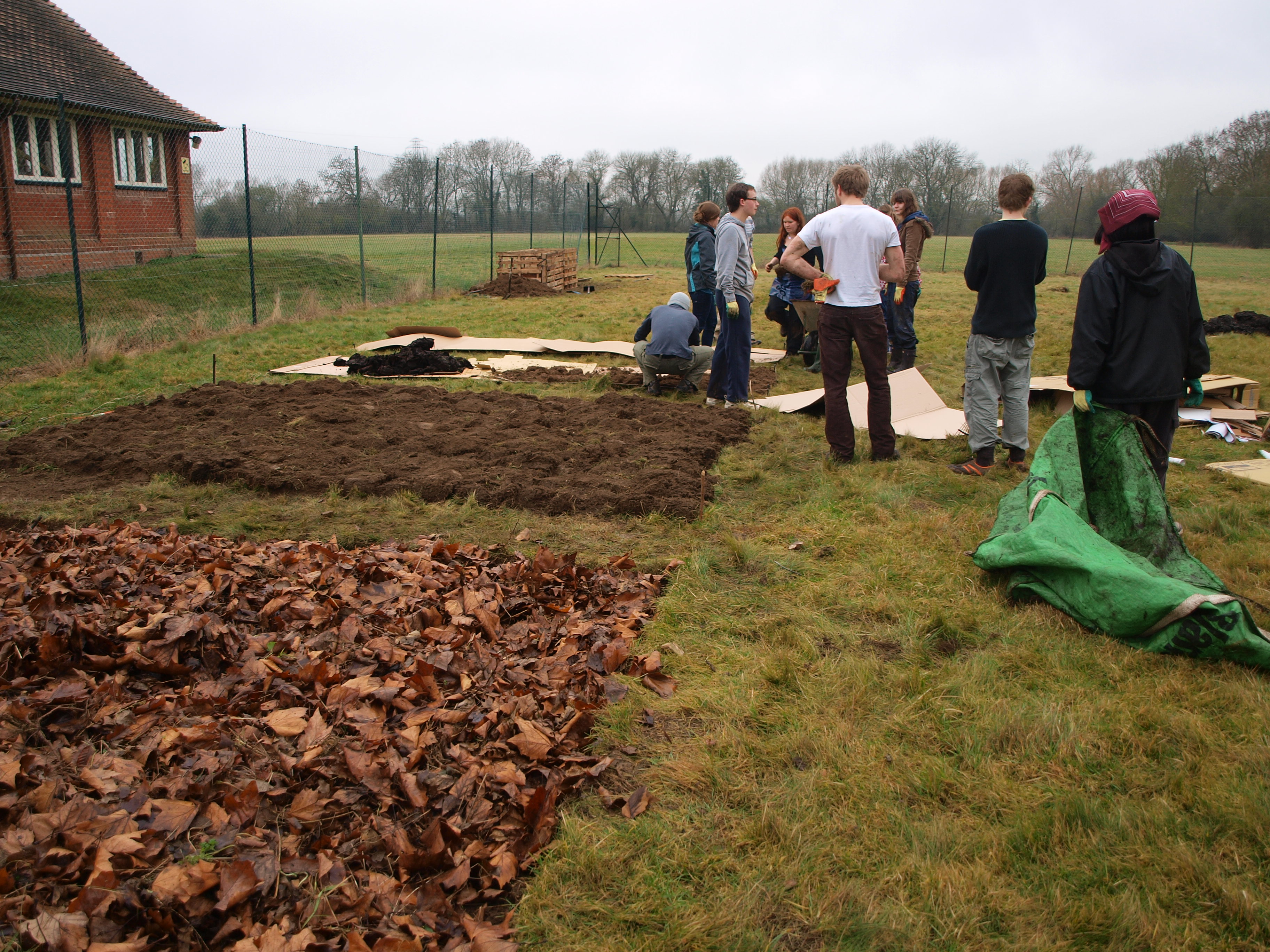
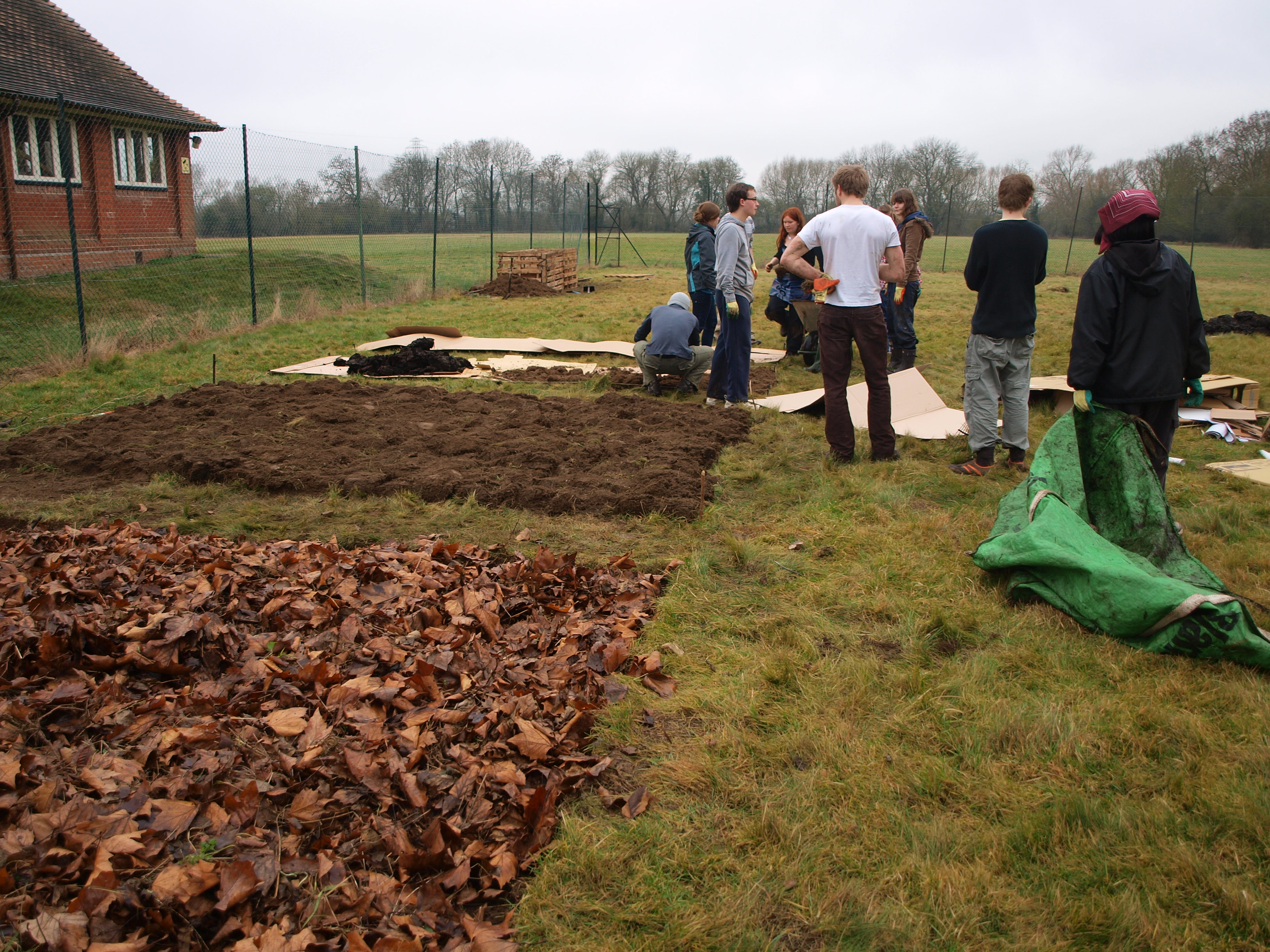
We got started on making the first few growing beds out of the blank canvas of grass that used to be the Corpus Christi tennis courts. We tried a couple of different techniques:

– In the far left corner we made two large beds (about 9’ x 15’ each) by digging out the turf on a first rectangle (to about 20cm depth) and then flipping it over and laying it out neatly onto an adjacent, already marked-out, second rectangle, just directly on top of the grass. This was a really quick way of preparing quite a large space, though where we’ve built up on the second bed by laying the turf, we might have to think about putting some wooden boards around to act as a retainer.

We finished off the first bed (now missing its turf and 20cm of topsoil) by spreading out some dropped leaves and well-rotted grass clippings that we collected from the boundaries of the playing field (very sludgy and smelly stuff made from years of it being left by the former groundskeepers). The addition of this organic matter should improve the moisture holding of the (fairly sandy) topsoil and provide some nutrients for worm and plant alike! The turf sandwich in the second bed should rot down nicely and leave us with a neat slightly raised bed. We’ll be looking to add some organic matter (either more grass-sludge, or else compost or well-rotted manure) to this bed too.

– We also set up two ‘no-dig’ beds, using a technique called “sheet mulching” that is very popular with permaculturalists. This time the beds were about 4’ wide, to allow anyone to reach the middle without having to walk on the bed, and the same length as the beds above. After marking the beds out, we laid cardboard (collected from recycling bins, with any plastic bits, sellotape, staples etc removed) directly onto the turf, and then placed dropped leaves, grass clippings-sludge and some soil removed in making the composters (see below) on top of the cardboard. The cardboard and grass below will rot down, and with some help from the many worms we found, all the organic matter we placed on top will get mixed in to leave a lovely, well-structured, fertile soil for us to plant into later in the season… Without having had to stick a single fork into the soil!

Composters

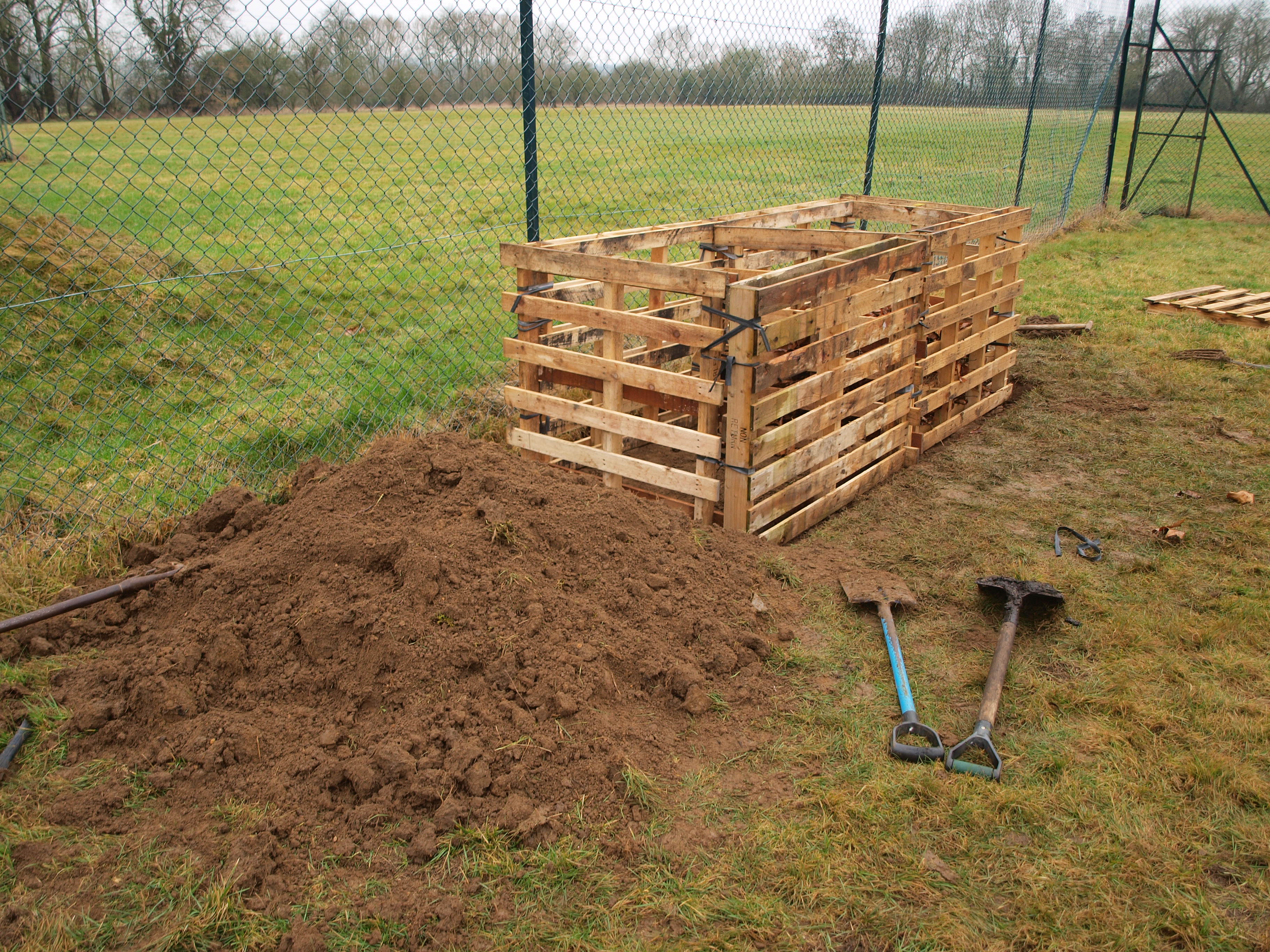
We built two big adjoining compost bins on the site too. We used wooden pallets that had been donated by a local builders’ yard. Pallets are dumped in landfill in huge numbers all the time, and they make perfect compost bins – and are a brilliant source of free wood for all sorts of other projects – so it’s a win-win all round! We dug a shallow rectangular hole the size we wanted our bins to be, and used the turf that we removed to build up the beds, this way we could “sink” our bins down a little below ground-level to keep them stable. We cut up long strips of bicycle inner tubes (donated by the Oxford Cycle Workshop) and used these to tie the pallets together instead of using wire, making the bins 100% reclaimed. We are reserving one bin for ordinary compost (uncooked fruit and veg peelings, tea-bags, garden waste, cardboard etc). We filled the other bin with dead leaves that we raked up from all over the site to make “leaf-mould”, which takes longer to make than ordinary compost but is wonderfully rich so it will be well worth the wait!
Joe and Doireann