The pages of our blog have been silent for too many a day, so busy have we been harvesting, sorting, threshing, cooking… and eating, of course. Which is an excuse to say that we welcome all to our wordpress to publish guest posts on food, food security, agriculture, gastronomy and etc relating to Oxford in some (even tenuous) way. If you’ve got an idea for a blog post or if you just want to write about what we did at last week’s work party, shoot an email to mail (at) oxgrow.org, which incidentally is our new email address.
For now however, the presence of numerous bags of apples all over my house, in various states of decomposition, is encouraging me to write up an update on the fruit-related activity of the last few weeks. It has been a bumper crop of apples this year of 2011, and an early one, informs Rupert of Tiddly Pommes, a brilliant Oxford apple-pressing business. He’s been working through the night to press the harvest of the numerous different varieties that end up as apple juice at the East Oxford Farmers’ Market, amongst them some Charles Ross and a few rough-skinned Egremont Russet, which are my favourite apple variety. If you find Rupert’s stall at the market he’ll give you a taster of all of his varieties, an experience akin to wine tasting that will take you about twenty minutes to complete if you’re really paying attention.
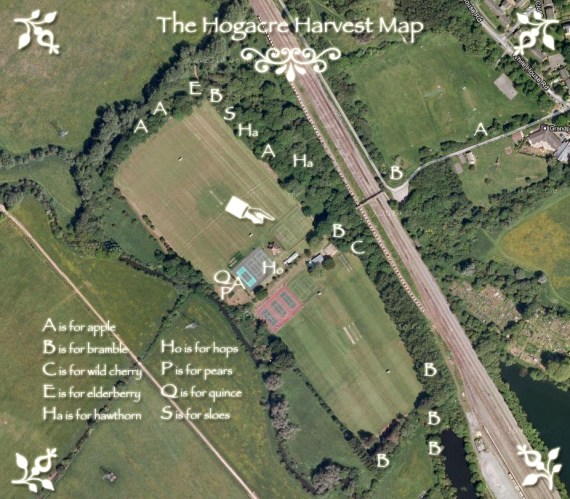
OxGrow has been engaged in an enterprise of a different nature, namely the mapping of fruit trees in the streets and fields of Oxford that are free for all to enjoy. At this time of year there is little need to buy fruit if you have a few minutes spare to harvest nature’s bounty. Our friend Jack has been putting together a map that will guide you towards your local trees and hedgerows, and last weekend we carried out a comprehensive trawl of the route from OxGrow to Iffley Road via Donnington Bridge to add to the directory. Our survey of the streets to the west of Abingdon Road proved them to be remarkably free of public trees (remember kids, ask before scrumping apples from private property, and leave plenty for the birds!), but we did identify a range of goodies lining the Hogacre Common site, including sloes, elderberries, hawthorn, apples and blackberries, which are viewable on a natty map of our own design. There’s much work to be done – please add your local trees to the Google map here.
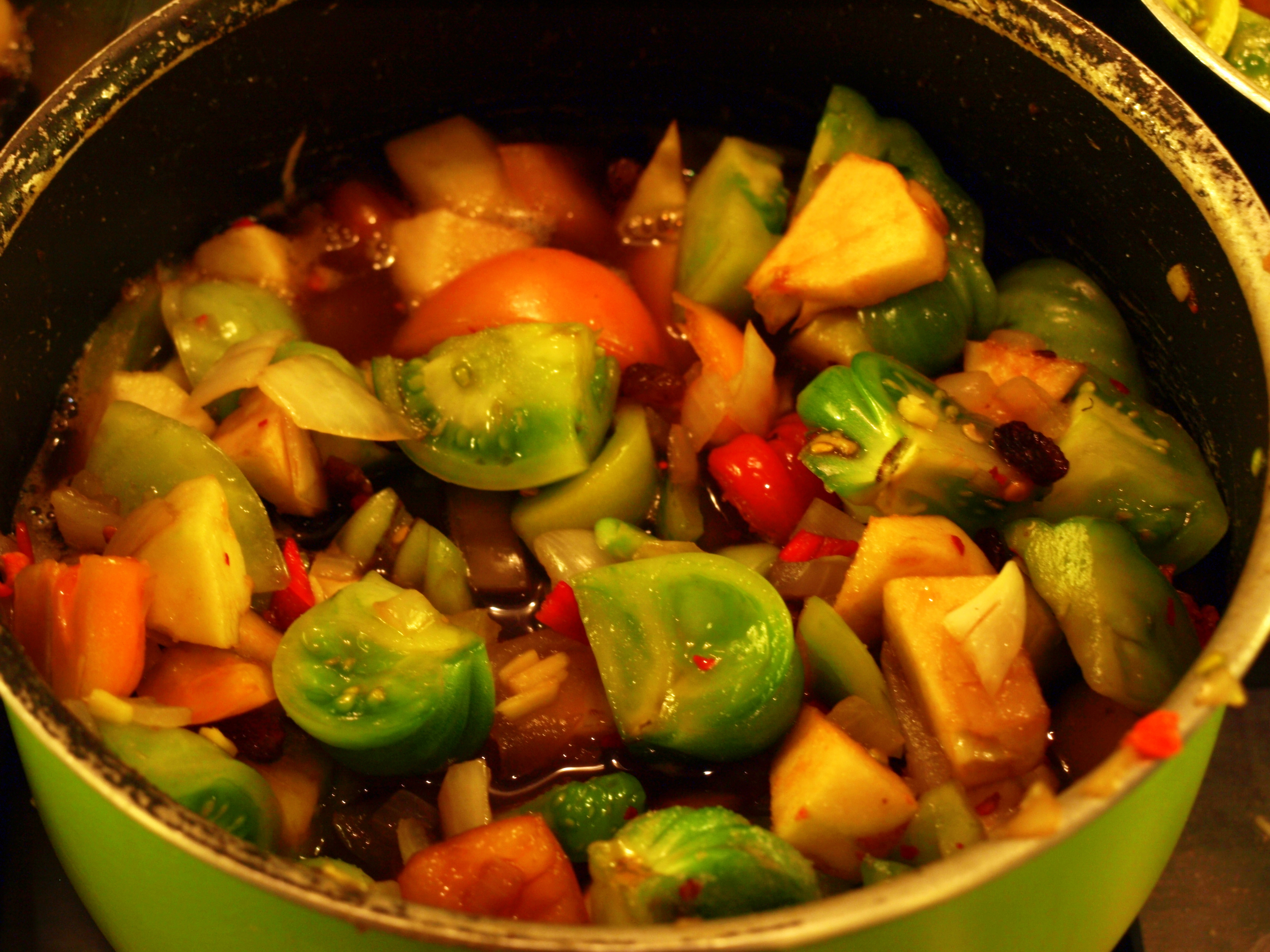
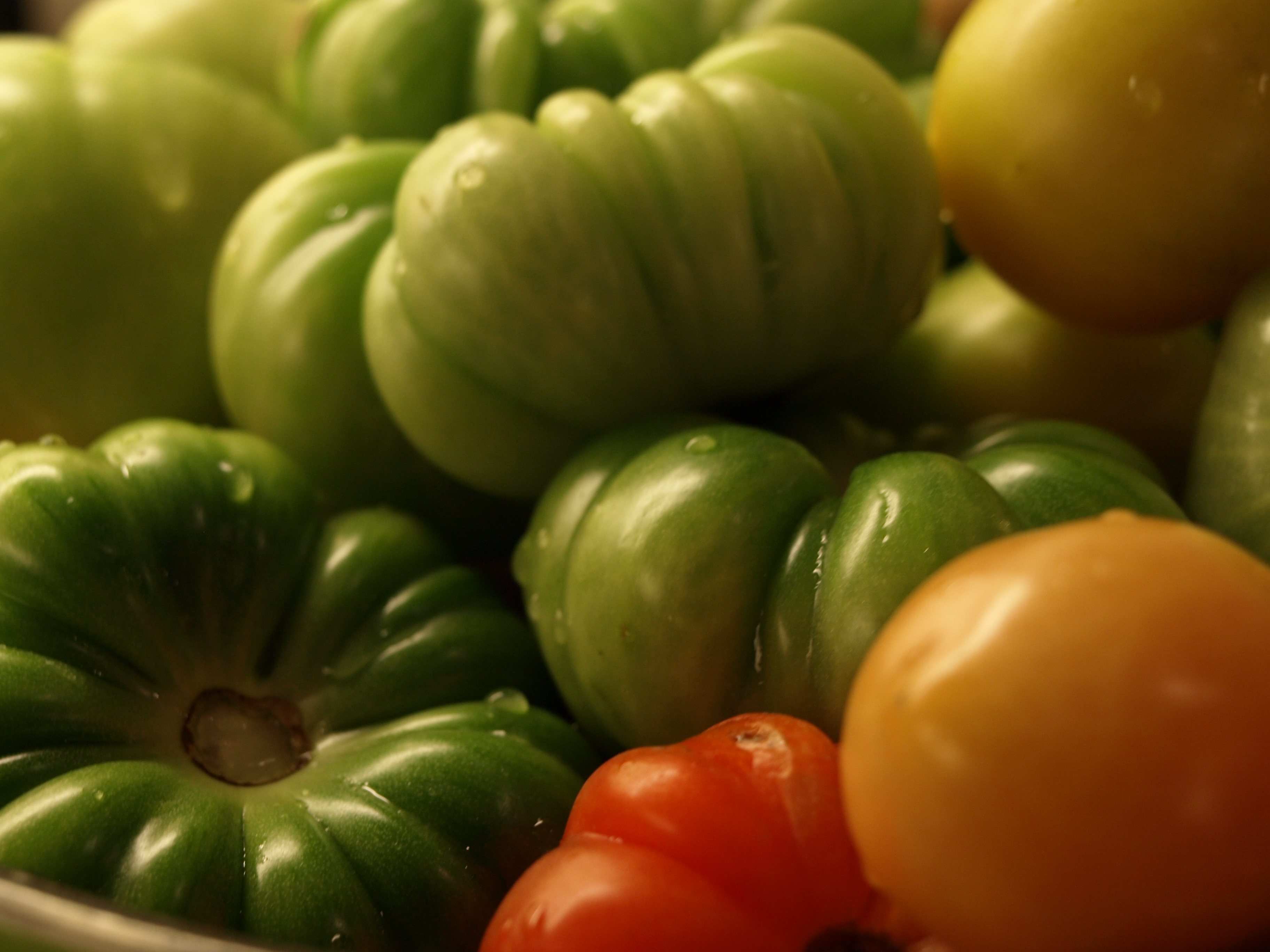
The conundrum of this season is of course the glut, however. Just what do you do with 20 kilos of apples? One noble solution is a very large apple pie. I leave you with another, which also makes use of another fruit of the season (at least for those gardeners who are permanently running several weeks late and might have forgotten to plant tomatoes on time) and which will be making a special appearance at the Hogacre Harvest festival on the 16th of October. Here’s the recipe: green tomato and bramley apple chutney (spicy or not), which was stolen off the internet and tweaked by myself and lovely co-chefs a few weeks ago. Sterilise your jars properly and it’ll last for months; adjust quantities as necessary. Nice with a spot of cheddar.
2kg Green tomatoes
500g Bramleys
250g Raisins
620g White onion
500g Demerara sugar
1/2 teaspoon allspice or spices according to your desire (ground cloves, cinnamon etc)
1-2 teaspoon salt
A few teaspoons chopped fresh ginger
1-3 Fresh red chillis according to taste (they taste good)
570ml pickling vinegar (comes in big, cheap jars)
Chop all of the ingredients according to whether you want to be able to spread the chutney onto an oatcake or if you prefer to eat it with a knife and fork (ours verged towards this end the scale). Bring to the boil in a huge pot or many small ones for 1/2 hour to one hour depending on pot size and what kind of consistency you want (thick and juicy, ideally – boil off most of the liquid). Wash jam jars and lids and then sterilise in a hot oven. Fill with chutney, screw on the lids. They will seal themselves as the chutney cools.
Julian


 OxGrow